




Health problems related to breathing, lungs, or chest can be distressing. It’s natural to wonder who to go to when such issues arise: a general physician or a specialist? Especially in cities like Hyderabad, where medical care is available, but choosing the right kind of doctor matters. In this article, you will learn the difference between a pulmonologist and a general physician, plus when to see each. We’ll also mention how Dr. Kunal Waghray, a leading pulmonologist in Hyderabad, can help with specific lung‐ and breathing‐related issues.
Who is a Pulmonologist?
A pulmonologist is a medical specialist who focuses on disorders of the lungs, respiratory system, and associated organs. This means conditions like asthma, chronic obstructive pulmonary disease (COPD), interstitial lung disease (ILD), pneumonia, tuberculosis, lung cancer, pulmonary hypertension, and sleep‐related breathing disorders fall under their expertise.
Pulmonologists undergo additional training beyond medical school and general practice. They often learn advanced diagnostic procedures (like bronchoscopy, lung function tests, imaging), intensive care management (helping patients with ventilators), and minimally invasive methods for lung treatment. In Hyderabad, a pulmonologist specialist like Dr. Kunal Waghray offers such expert care, including interventions when lung conditions are more complex. His training, experience, and focus make him particularly suited to treating severe or advanced respiratory diseases.
Who is a General Physician?
A general physician (also called a general practitioner or internist in many places) is a doctor who tends to a wide range of common health issues. They diagnose and treat multiple types of illnesses, from infections (cold, flu) to digestive, cardiovascular, or metabolic problems. They manage chronic diseases like hypertension, diabetes, and thyroid disorders. They also provide preventive care, checkups, vaccinations, and initial diagnosis of new symptoms.
General physicians have broad medical knowledge, but they are not specialists in one organ system. They may refer patients to specialists when the problem is outside their scope or when the disease is complex and requires specialized tools or procedures.
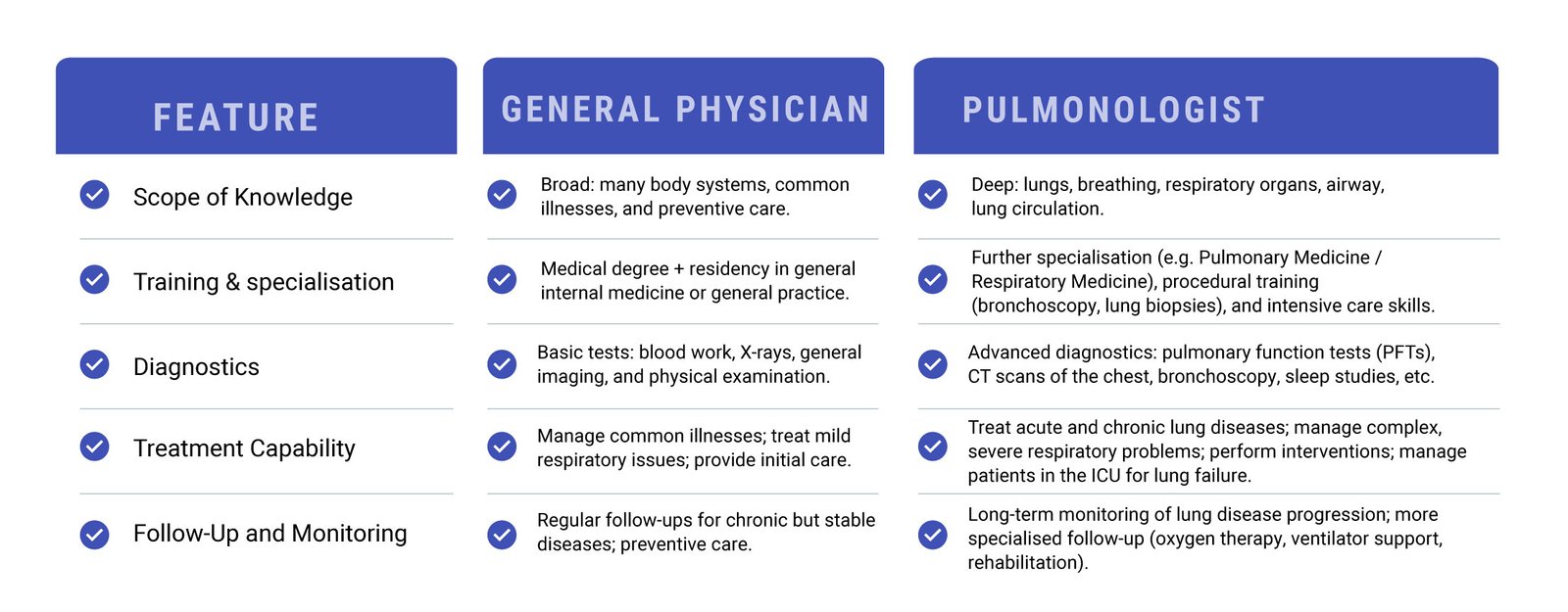
Key Differences Between a Pulmonologist and a General Physician
Here are the main contrasts that help you understand which one might be needed.
When to See a Pulmonologist Vs a General Physician
Knowing when to consult which kind of doctor can make a real difference in outcomes.
See a General Physician if:
- You have mild symptoms: a common cold, mild cough, mild breathlessness after heavy exertion.
- You have general health issues like fever, body aches, digestive problems, or common infections.
- You need routine health screenings, vaccinations, or management of common chronic conditions (e.g. diabetes, blood pressure).
- You want a first opinion or basic treatment and are unsure if the problem is serious.
See a Pulmonologist if:
- Your breathing issues are persistent or worsening: chronic cough, wheezing, shortness of breath even at rest or minimal activity.
- You suspect lung diseases, for example, asthma that doesn’t respond well to standard treatment, COPD, tuberculosis, or interstitial lung disease.
- You have frequent lung infections, or your infection is severe (like pneumonia) and not improving.
- You have risk factors like smoking history, occupational exposures, or a family history of lung problems.
- You experience sleep disorders with breathing problems (like sleep apnea).
- You require specialized diagnostic tests or procedures such as bronchoscopy, CT chest imaging, lung biopsies, etc.
- Severe or critical illness: breathing failure, need for ventilator support, complications in lung function.
Pulmonologist in Hyderabad: What to Expect
If you live in Hyderabad and are considering seeing a specialist, a pulmonologist in Hyderabad will offer services tailored to lung care. Dr. Kunal Waghray is one such specialist. He provides comprehensive care for respiratory issues, diagnosing complex lung conditions, performing advanced diagnostic tests, delivering cutting-edge interventions, and managing critical illness when needed. His clinic is equipped for both early detection and treatment of lung diseases.
When you visit a pulmonologist Like Dr. Kunal Waghray, expect more focused questioning about your symptoms: duration, triggers (smoke, dust, allergies), past lung disease, travel, and smoking history. Also expect more specialized tests beyond basic blood work and X-rays lung function tests, imaging, maybe bronchoscopy or sleep studies if needed.
Conclusion
Both general physicians and pulmonologists play important roles in healthcare. A general physician is often the first doctor you see and can manage many health issues effectively, including mild respiratory conditions. But when symptoms are serious, persistent, or complex, especially with lungs and breathing involvement, a pulmonologist’s specialized care is essential.
If you are in Hyderabad and suspect your respiratory issues are beyond what a general physician can handle, don’t hesitate to consult a pulmonologist. Professionals like Dr. Kunal Waghray offer a depth of experience, diagnostic tools, and treatments to handle serious lung and airway problems. Early consultation can lead to better outcomes, faster recovery, and improved quality of life.
Remember: when in doubt, start with your general physician. But if breathing problems persist, turn to the specialist. Your lungs deserve expert care.