
If your chest has felt tighter, your cough has come back, or your inhaler has been busier than usual since the rains started, you’re not imagining it. Monsoon is one of the toughest seasons for lung health in Hyderabad, and it catches a lot of patients off guard every year. Understanding what’s happening to your airways during monsoon breathing problems in Hyderabad can help you manage it before it turns into a full flare-up. Dr. Kunal Waghray, a pulmonologist in Hyderabad at KIMS – Sunshine Hospital, Begumpet, sees a clear seasonal spike in OPD visits every year once the rains set in — and most of it is preventable with the right precautions.
What Causes Monsoon-Related Breathing Issues?
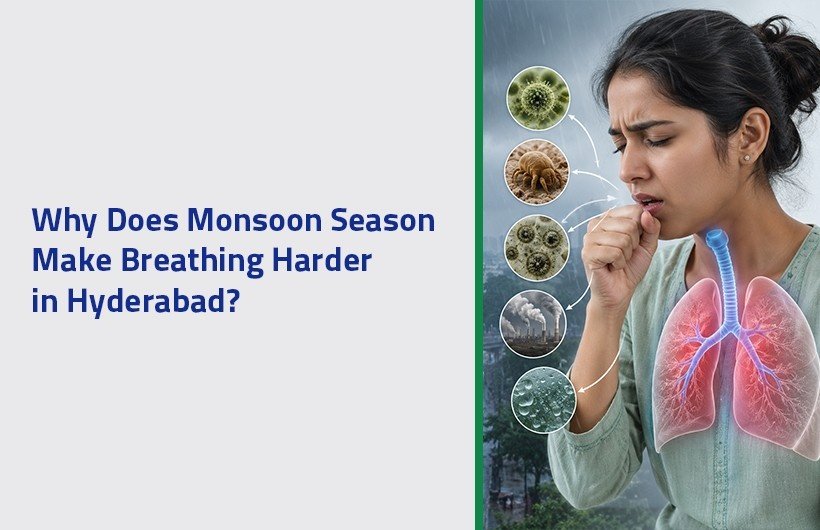
Monsoon affects the lungs through a combination of factors that don’t get as much attention as summer pollution or winter smog, but hit just as hard:
- Humidity thickens mucus and slows airway clearance, making it easier for infections to take hold and harder for existing conditions like asthma or COPD to stay controlled
- Damp indoor spaces become breeding grounds for Mold and dust mites, both of which are common asthma and allergy triggers that spike sharply during the rains
- Sudden temperature drops during and after rain can trigger airway constriction in people with sensitive airways
- Waterlogging and poor drainage in parts of Hyderabad increase exposure to damp, musty air, particularly in ground-floor homes and older buildings
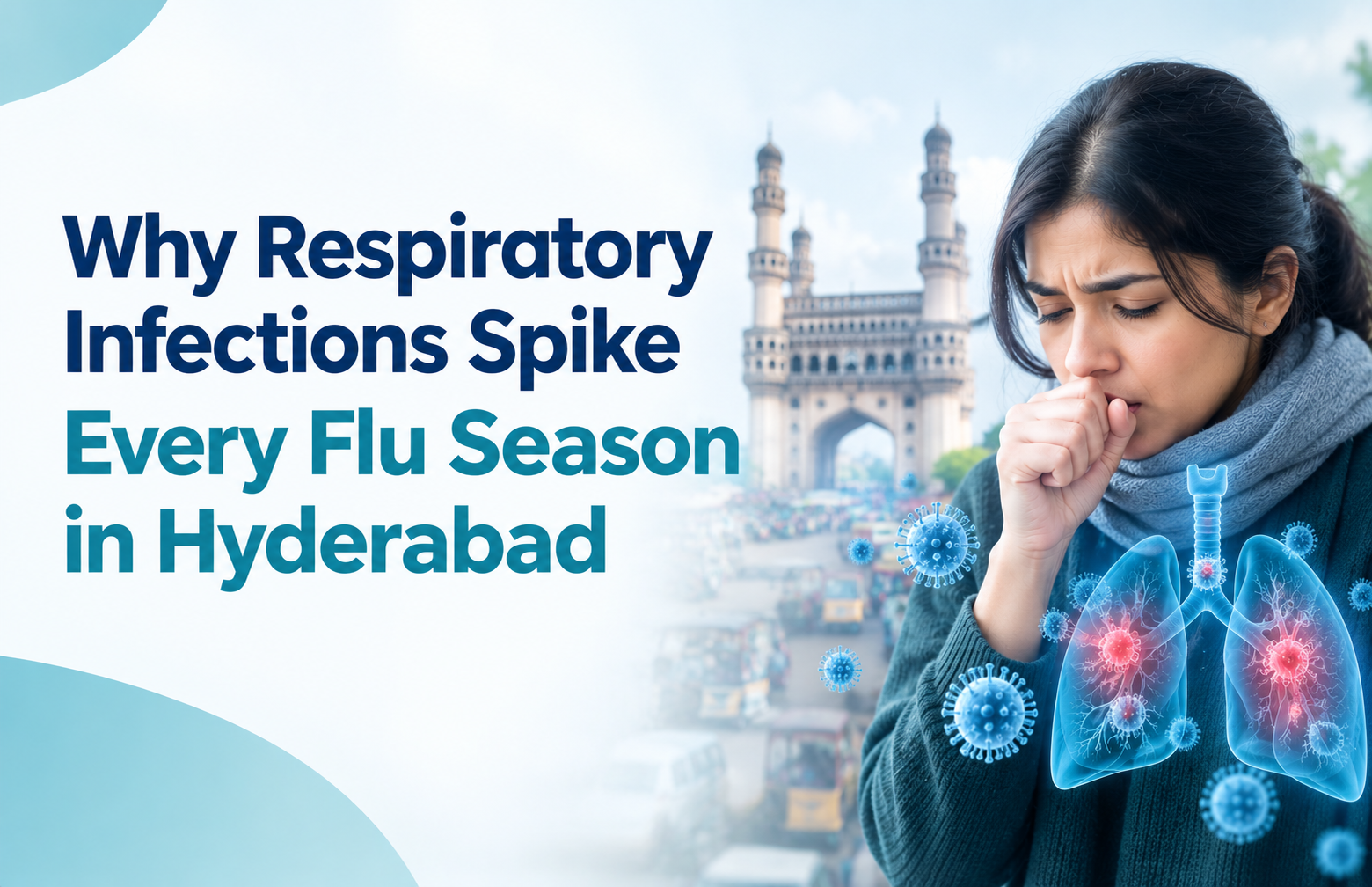
- Viral infections spread faster in monsoon, and a simple cold can tip someone with underlying asthma or COPD into a more serious flare
None of these are new information exactly, but most patients don’t connect them until they’re already coughing through their third week of “just a cold that won’t go.”
Who’s Most at Risk This Monsoon?
Certain groups feel the effects of monsoon more sharply than others:
- People with existing asthma or COPD, who are especially prone to flare-ups when humidity and Mold exposure rise
- Children and elderly patients, whose airways are more reactive to sudden weather and allergen changes
- Anyone with a known dust mite or mold allergy, even if it’s usually mild the rest of the year
- Patients recovering from a recent respiratory infection, whose airways are still inflamed and more vulnerable
- People living in older or poorly ventilated homes, where dampness accumulates faster
If you fall into more than one of these categories, it’s worth being a little more proactive this season rather than waiting to see how your chest responds.
Dr. Kunal Waghray
Warning Signs You Shouldn’t Ignore
A bit of monsoon sniffling is normal. These signs suggest it’s moved beyond that:
- Breathlessness that interrupts your normal activity, not just during exertion
- A cough that’s lasted more than two weeks without improving
- Wheezing or a whistling sound when you breathe
- Needing your reliever inhaler more often than usual
- Chest tightness that comes on with weather changes, not just exercise
- Fever alongside breathing difficulty, which can point to a chest infection rather than a simple allergy flare
If any of this sound familiar, it’s a better idea to get checked than to wait it out with home remedies and hope the season passes quickly.
How Dr. Waghray Manages Monsoon Flare-Ups
For patients with known asthma or COPD, Dr. Kunal Waghray typically reviews whether the current inhaler and medication plan needs a seasonal adjustment before symptoms escalate, rather than waiting for a flare-up to happen first. This can include a short-term step-up in controller medication during peak monsoon weeks, addressing any allergy component with the right anti-allergic treatment, and ruling out infection where the pattern points to more than just weather sensitivity.
For patients without a prior diagnosis who are noticing symptoms for the first time this season, the first step is usually a proper history and a lung function assessment, since a monsoon cough that keeps recurring year after year is sometimes the first sign of underlying asthma that’s never been formally diagnosed.
Simple Precautions to Protect Your Lungs This Monsoon
A few adjustments make a real difference during the wetter months:
- Keep indoor humidity in check — a dehumidifier or simply good cross-ventilation helps prevent mold buildup
- Dry damp clothes, shoes, and curtains fully before storing them; damp fabric is a common hidden mold source
- Avoid stepping out right after rainfall when temperature swings are sharpest, if you’re prone to airway sensitivity
- Keep your reliever inhaler within reach if you have asthma, even on days you feel fine
- Don’t ignore a “simple cold” that isn’t clearing after 7–10 days, especially if you already have a lung condition
These same seasonal-trigger principles carry over from what we’ve covered before on how seasonal changes affect asthma control — monsoon is simply the most intense version of that pattern in Hyderabad’s climate.
The Takeaway
Monsoon breathing problems in Hyderabad are common, but they’re also manageable once you know what’s triggering them. If your chest has felt off since the rains started — or your usual asthma or COPD control has slipped — don’t wait for it to peak before getting it looked at. Dr. Waghray sees patients at KIMS – Sunshine Hospital, Begumpet, Monday to Saturday — contact us to book a consultation, or WhatsApp us if you have a quick question first.
Meet Dr. Kunal, Pulmonologist & Critical Care Specialist in Hyderabad
Get expert care for bronchiectasis and other respiratory conditions. Schedule a consultation with Dr. Kunal for personalized diagnosis and treatment.
Frequently Asked Questions
Q: Why does my asthma get worse specifically during monsoon?
A: Humidity thickens mucus in the airways and creates ideal conditions for Mold and dust mites, both common asthma triggers. Sudden temperature drops during rain can also cause airway constriction, compounding the effect.
Q: Is a monsoon cough that won’t go away always an infection?
A: Not always. It can be a lingering viral infection, but a persistent cough that flares every monsoon and settles the rest of the year is sometimes a sign of undiagnosed allergic asthma rather than a fresh infection each time.
Q: Can healthy people with no lung history develop breathing problems in monsoon?
A: Yes, though it’s less common. New-onset wheezing or breathlessness during monsoon can happen even without a prior history, often linked to Mold or dust mite exposure in damp indoor spaces.
Q: Should I change my inhaler dose on my own during monsoon?
A: No — any adjustment to inhaler dose or frequency should be guided by your doctor. Self-adjusting can mask worsening symptoms or lead to overuse without addressing the actual trigger.
Q: When should I see a pulmonologist instead of just managing it at home?
A: If your cough lasts beyond two weeks, you’re using your reliever inhaler more than usual, or you’re breathless during normal activity, it’s time for a proper evaluation rather than continuing to self-manage.
This content is for educational purposes and isn’t a substitute for an in-person medical consultation. Please see a pulmonologist for diagnosis and treatment tailored to your condition.