
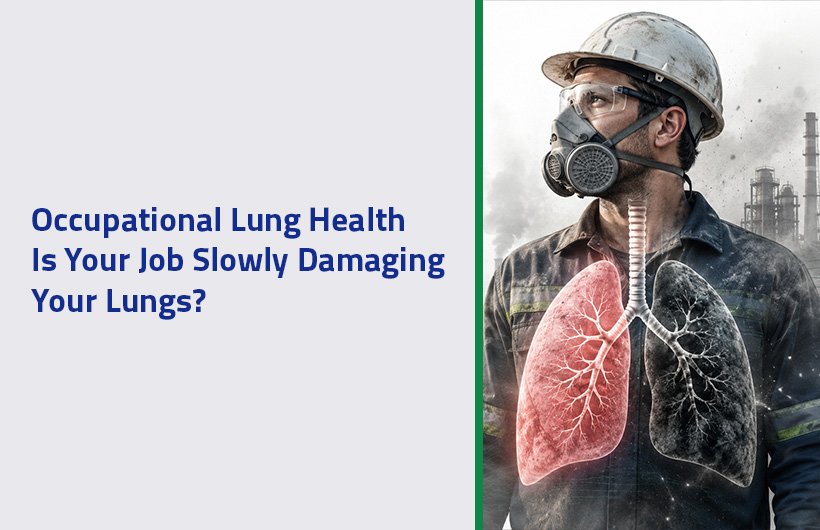


If your work involves dust, smoke, chemical fumes, or poorly ventilated indoor spaces, your lungs may be dealing with more than you realise, often years before any symptom shows up. This is the quiet part of respiratory health that rarely gets discussed: occupational lung disease treatment in Hyderabad is something most people only investigate after symptoms have already progressed, simply because the damage builds so gradually. Dr. Kunal Waghray, a pulmonologist in Hyderabad at KIMS – Sunshine Hospital, Begumpet, regularly sees patients whose breathing problems trace back not to smoking or infection, but to years of workplace exposure they never connected to their lungs.
What Is Occupational Lung Disease?
Occupational lung disease is a broad term for any lung condition caused or worsened by something in your work environment, dust, chemical vapours, fumes, gases, or airborne particles that get inhaled repeatedly over months or years. Unlike a chest infection that announces itself quickly, occupational lung damage tends to build silently. The lungs try to clear out what they’re exposed to, but with constant, repeated exposure, that clearing process can’t keep up, and inflammation or scarring gradually sets in.
By the time symptoms become noticeable, persistent cough, breathlessness on exertion, or reduced stamina, a meaningful amount of change has often already happened in the lung tissue. That’s exactly why this category of lung disease deserves more attention than it usually gets.
Who’s Actually at Risk?
Occupational lung disease isn’t limited to obvious heavy-industry jobs. In and around Hyderabad, we typically see risk concentrated in:
- Construction and demolition workers, cement dust, silica particles
- Factory and manufacturing employees, chemical fumes, metal dust, industrial particulates
- Welders and metalworkers, metal fumes and fine particulate exposure
- Traffic police and outdoor workers, prolonged exposure to vehicular pollution and road dust
- Textile and garment workers, cotton dust and synthetic fibre particles
- Agricultural workers, organic dust, pesticides, mold spores from stored grain
- Painters and workers handling solvents or adhesives, chemical vapour exposure
- Warehouse and logistics staff in poorly ventilated storage spaces
If your daily work falls into any of these categories, even without symptoms yet, it’s worth thinking about screening the same way you’d think about a routine health check-up.
Common Occupational Lung Conditions
Depending on the type and duration of exposure, occupational lung disease can show up as several distinct conditions:
- Pneumoconiosis, lung scarring from long-term dust inhalation (silica, coal, or other mineral dust)
- Occupational asthma, new-onset or worsened asthma triggered specifically by workplace irritants
- Hypersensitivity pneumonitis, lung inflammation from repeated exposure to organic dust, mold, or certain chemicals
- Chronic bronchitis and reduced lung function, from long-term irritant exposure, even without a specific diagnosis attached
- Interstitial lung changes, scarring patterns that can resemble ILD but are traced back to a workplace cause once the exposure history is taken seriously
The common thread across all of these is that they’re largely preventable and, if caught early, manageable, but they’re frequently missed because no one asks the right question: “What do you actually do all day, and what are you breathing in while you do it?”
Warning Signs to Take Seriously
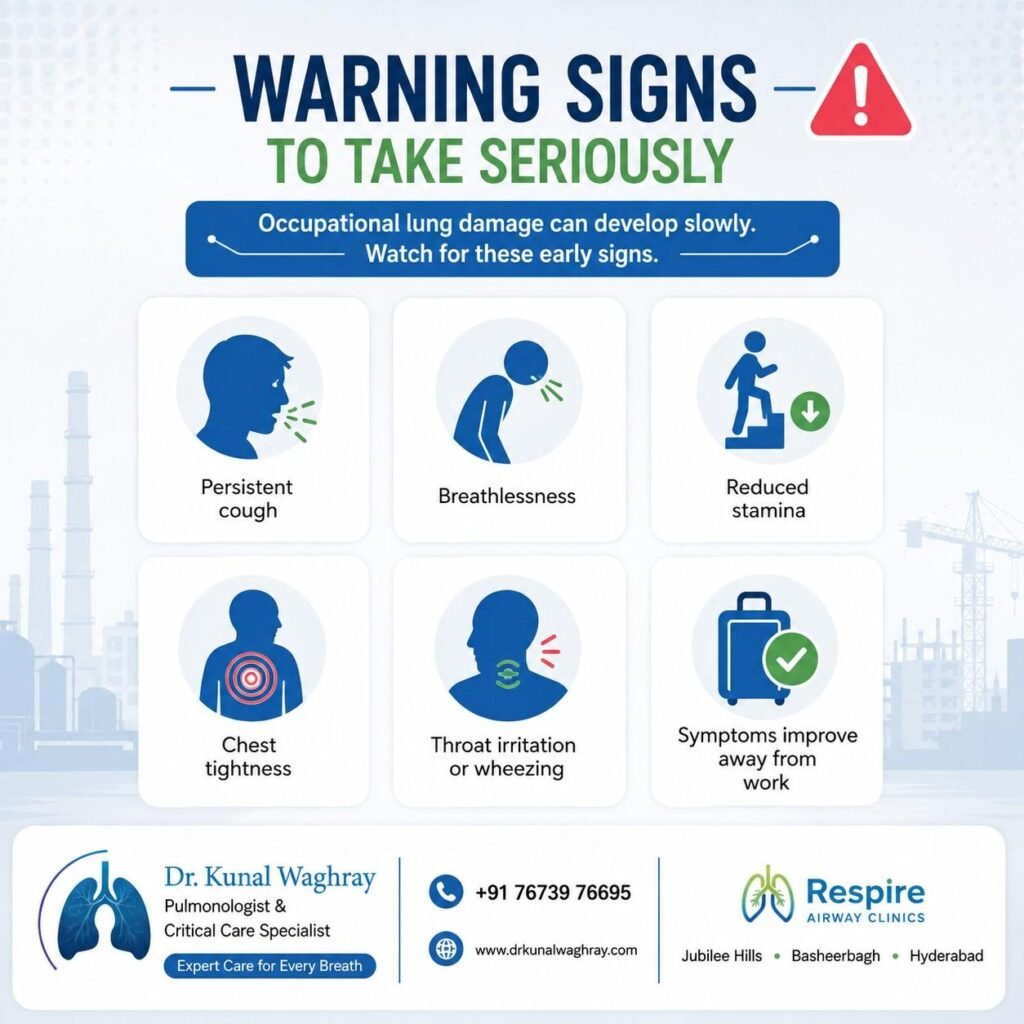
Occupational lung damage rarely presents as an emergency early on. Watch for:
- A cough that’s become part of your daily routine, especially if it’s worse at work and eases on days off
- Breathlessness that’s new or has gradually worsened over months or years
- Reduced stamina for physical tasks you used to manage easily
- Tightness in the chest, particularly during or right after work
- Frequent throat irritation or wheezing tied to your work environment
- Symptoms that improve noticeably during holidays or time away from the worksite, a strong clue that work exposure is involved
That last point is one patient often don’t think to mention, but it’s one of the most useful clues in connecting symptoms to a workplace cause.
How Dr. Waghray Evaluates Occupational Lung Health
Dr. Kunal Waghray starts with a detailed occupational history, not just your current job, but past roles too, since some occupational lung changes take years to surface. This is paired with a pulmonary function test to assess how well your lungs are working, and imaging (chest X-ray or HRCT, depending on the exposure pattern) to check for early scarring or structural changes that wouldn’t show up on symptoms alone.
For workers in higher-risk occupations, periodic lung screening, even without symptoms, is genuinely worth building into your routine, the same way factory and industrial safety protocols already include regular health checks in many workplaces. Catching a pattern early, before scarring becomes significant, is what makes the biggest difference in long-term outcomes.
Simple Steps to Protect Your Lungs at Work
While a proper evaluation is what confirms or rules out occupational lung disease, a few practical habits reduce daily exposure:
- Use a properly rated mask (N95 or task-appropriate respirator) in dusty or fume-heavy environments, not just any cloth covering
- Ensure your workspace has adequate ventilation, push for it if it’s lacking
- Avoid eating or drinking in areas with active dust or chemical exposure
- Shower and change clothes after a shift where possible, to avoid prolonged skin and airway contact with residual particles
- Don’t ignore a “work cough” as just part of the job, bring it up at your next check-up
The Takeaway
If your work puts you around dust, fumes, or chemical exposure day after day, your lungs deserve the same routine attention you’d give any other part of your health. A cough or breathlessness that’s “just part of the job” is worth a proper look, not a shrug. Dr. Waghray sees patients for occupational lung evaluation at KIMS – Sunshine Hospital, Begumpet, Monday to Saturday, contact us to book a screening, or WhatsApp us with any questions first.
Meet Dr. Kunal, Pulmonologist & Critical Care Specialist in Hyderabad
Get expert care for bronchiectasis and other respiratory conditions. Schedule a consultation with Dr. Kunal for personalized diagnosis and treatment.
Frequently Asked Questions
Q: How long does it take for occupational lung disease to develop?
A: It varies widely, some conditions like occupational asthma can develop within months of exposure, while pneumoconiosis from dust exposure often takes years of cumulative exposure before symptoms appear.
Q: I’ve never smoked. Can I still get occupational lung disease from my job alone?
A: Yes. Workplace exposure alone can cause lung damage regardless of smoking history, though smoking combined with occupational exposure significantly increases risk and speeds up progression.
Q: Is occupational lung disease reversible if I change jobs early?
A: Some early changes, particularly inflammation without significant scarring, can improve once exposure stops. Established scarring is generally permanent, which is why earlier detection makes a real difference.
Q: What tests are used to screen for occupational lung disease?
A: A pulmonary function test (spirometry) and chest imaging are the standard starting points, guided by a detailed history of your specific workplace exposures.
Q: Should I get screened even if I have no symptoms?
A: If you work in a high-exposure environment, construction, factories, welding, or similar, yes. Occupational lung disease often develops silently before symptoms appear, so periodic screening catches problems earlier than waiting for symptoms to show up.
This content is for educational purposes and isn’t a substitute for an in-person medical consultation. Please see a pulmonologist for diagnosis and treatment tailored to your condition.