
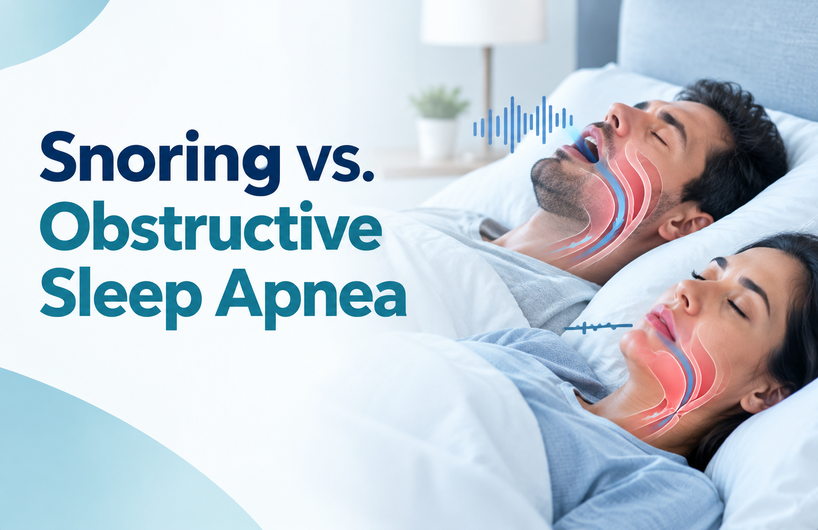
Almost every household has had this conversation at some point: one partner snores, the other loses sleep over it, and somewhere in the back of everyone’s mind is the question of whether it’s actually just noise or something worth worrying about. The snoring vs sleep apnea question comes up in clinic more often than almost any other sleep-related concern, and it’s a genuinely reasonable thing to be unsure about, because the two can look and sound remarkably similar from the outside. Dr. Kunal Waghray, a pulmonologist and sleep specialist in Hyderabad at KIMS – Sunshine Hospital, Begumpet, walks patients and their families through exactly this distinction on a regular basis, and getting it right matters more than most people realise, because the two conditions carry very different long-term risks.
Why Snoring vs Sleep Apnea Isn’t Always Obvious
Snoring happens when air passes through a partially blocked or narrowed airway during sleep, causing the surrounding soft tissue to vibrate. It’s extremely common, affects a large share of adults at some point, and on its own, doesn’t necessarily mean anything serious is wrong.
Obstructive sleep apnea (OSA) is a different, more serious condition where that airway doesn’t just narrow, it actually closes off completely for brief periods, repeatedly, throughout the night. Each of these pauses can last ten seconds or longer and may happen dozens of times an hour in more severe cases. The confusion in the snoring vs sleep apnea comparison comes from the fact that loud snoring is usually present in OSA too, so the snoring itself isn’t what separates the two conditions. What matters is what’s happening in between the snores.
The Key Differences to Listen and Watch For
Here’s where the snoring vs sleep apnea distinction actually becomes practical, especially for a bed partner who’s often the first to notice a pattern:
- Simple snoring tends to be continuous and steady, without noticeable pauses in breathing, and the person usually wakes up feeling reasonably rested
- Sleep apnea typically involves loud snoring interrupted by silent pauses, followed by a gasp, snort, or choking sound as breathing restarts
- Daytime symptoms are the biggest tell. Simple snorers generally don’t struggle with daytime sleepiness, while OSA patients often feel exhausted no matter how many hours they slept
- Witnessed breathing pauses are a strong indicator of OSA specifically. If a partner has ever said “you stopped breathing for a few seconds,” that’s worth taking seriously rather than brushing off as a one-off
- Morning headaches, dry mouth, and waking up gasping are more characteristic of OSA than simple snoring
None of these signs alone confirms a diagnosis, but a cluster of them is a strong enough pattern to justify a proper evaluation.
Who’s More Likely to Have Sleep Apnea Rather Than Simple Snoring?
Certain factors shift the odds meaningfully toward OSA rather than benign snoring:
- Being overweight, particularly with extra tissue around the neck
- A thicker neck circumference (generally above 17 inches in men, 16 inches in women)
- A family history of sleep apnea
- Large tonsils, a naturally narrow airway, or a recessed jaw
- Age over 40, though OSA can occur at any age
- Men are affected more often than women, though the gap narrows after menopause
If several of these apply to you or your partner alongside the warning signs above, it’s a reasonable enough combination to bring up at your next check-up rather than waiting for things to feel more urgent.
Why the Distinction Actually Matters
This is the part that often gets lost in the snoring vs sleep apnea conversation: simple snoring, while socially disruptive, generally isn’t linked to major long-term health risk. Untreated OSA is a different story entirely. The repeated drops in oxygen and fragmented sleep that come with OSA are associated with a meaningfully higher risk of high blood pressure, heart disease, stroke, type 2 diabetes, and daytime accidents from impaired alertness, including while driving.
Sleep quality affects far more of your health than most people assume, feeding into everything from immune function to memory and mood, which is a broader point worth understanding on its own, covered in more depth in why quality sleep matters for your overall health. OSA is one of the more treatable reasons that quality erodes, which is exactly why sorting out snoring vs sleep apnea early is worth the effort.
How Is the Difference Actually Diagnosed?
A conversation and symptom checklist can point strongly toward one or the other, but a definitive answer in the snoring vs sleep apnea question comes from a sleep study, formally called polysomnography. This measures how often your breathing pauses during sleep, how much your oxygen levels drop, and how fragmented your sleep actually is, using a metric called the Apnea-Hypopnea Index (AHI).
Sleep studies can be done in a sleep lab overnight or, for many patients, through a simpler home sleep test using a portable device. Dr. Kunal Waghray typically starts with a detailed history and physical exam, including checking the airway and neck, before deciding which type of study makes sense for a given patient.
How Is Sleep Apnea Treated Once Confirmed?
Treatment for OSA depends on severity, and proper treatment for sleep apnea in Hyderabad starts with getting that severity confirmed through a sleep study rather than guessing. Mild cases often respond well to weight management, positional therapy (avoiding sleeping on your back), and treating nasal congestion or allergies that worsen airway narrowing. Moderate to severe OSA usually needs more active treatment, most commonly CPAP (Continuous Positive Airway Pressure) therapy, which keeps the airway open throughout the night using gentle air pressure through a mask. Oral appliances that reposition the jaw are another option for select patients, and in specific structural cases, surgical options may be considered.
Simple snoring without OSA is managed very differently, usually with lifestyle changes, positional adjustments, or treating nasal blockages, since there’s no dangerous breathing pattern to correct medically.
The Takeaway
Snoring vs sleep apnea isn’t always something you can confidently tell apart just by listening through the wall. The pattern of pauses, gasping, and how rested you feel during the day are the real clues, and a proper sleep evaluation is the only way to know for certain. Dr. Waghray evaluates and manages sleep-related breathing disorders at KIMS – Sunshine Hospital, Begumpet, Monday to Saturday. Contact us to book a sleep consultation, or WhatsApp us if you or your partner have noticed any of these warning signs.
Meet Dr. Kunal, Pulmonologist & Critical Care Specialist in Hyderabad
Get expert care for bronchiectasis and other respiratory conditions. Schedule a consultation with Dr. Kunal for personalized diagnosis and treatment.
Frequently Asked Questions
Q: If my partner says I don’t stop breathing, does that rule out sleep apnea? A: Not entirely, since some pauses are hard to notice, especially in mild cases. But witnessed breathing pauses are one of the stronger indicators, so their absence does make simple snoring more likely.
Q: Can thin, fit people have sleep apnea too? A: Yes. While excess weight is a major risk factor, structural features like a naturally narrow airway, large tonsils, or a recessed jaw can cause OSA even in people who are otherwise fit.
Q: Is a home sleep test as accurate as an in-lab sleep study? A: For many patients with a moderate-to-high likelihood of OSA, home sleep tests are quite reliable. Your doctor will recommend an in-lab study instead if your case needs more detailed monitoring.
Q: Does snoring on its own ever need treatment? A: If it’s disrupting sleep for you or a partner, or if it’s loud and frequent enough to warrant checking, it’s reasonable to get evaluated, mainly to confirm it isn’t early OSA rather than because simple snoring itself is dangerous.
Q: How quickly does CPAP therapy actually help once started? A: Many patients notice improved energy and reduced daytime sleepiness within the first one to two weeks of consistent CPAP use, though adjusting to the mask and settings can take a short adaptation period.
This content is for educational purposes and isn’t a substitute for an in-person medical consultation. Please see a pulmonologist for diagnosis and treatment tailored to your condition.