Do you wake up every morning feeling exhausted even after a full eight hours of sleep? Does your partner complain about loud snoring or moments where you seem to stop breathing in the night? These are not just inconveniences; they could be signs of obstructive sleep apnea (OSA), a serious but highly treatable sleep disorder.
As a Pulmonologist in Hyderabad, I see patients with undiagnosed sleep apnea almost every week. Many have spent years dismissing their fatigue as stress or a busy lifestyle, not realizing that their breathing is being interrupted dozens of times, sometimes hundreds of times every single night. If you are looking for reliable sleep apnea treatment in Hyderabad, this guide will walk you through everything you need to know.
What Is Obstructive Sleep Apnea?
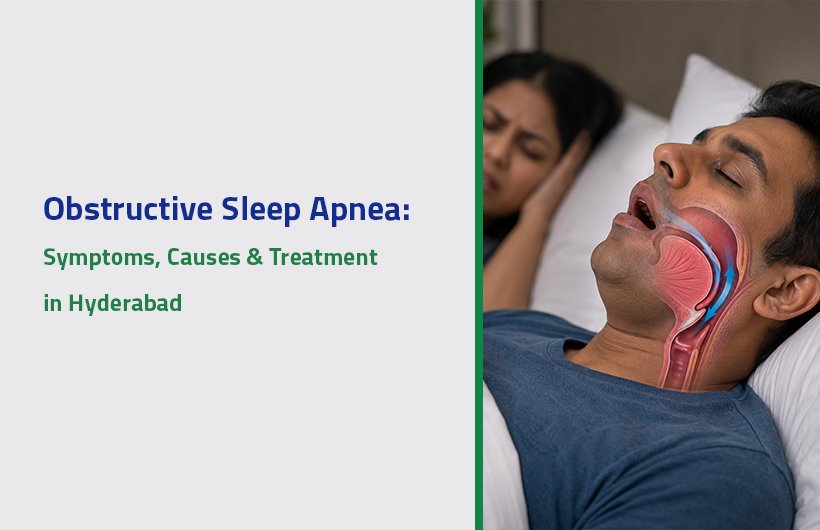
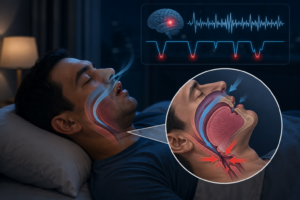
Obstructive sleep apnea is a condition where the muscles at the back of your throat repeatedly relax during sleep, causing your airway to narrow or close completely. When this happens, airflow stops sometimes for 10 seconds, sometimes for a minute or longer.
Your brain then jolts you out of deep sleep just enough to reopen the airway. You may not remember these awakenings, but they happen constantly throughout the night. Over time, this pattern destroys the quality of your sleep and puts serious strain on your heart, lungs, and brain.
OSA is far more common than most people realize. Studies estimate that nearly 13–15% of Indian adults have some degree of sleep-disordered breathing, yet the vast majority are never formally diagnosed.
Common Symptoms of Sleep Apnea You Should Not Ignore
Sleep apnea does not always announce itself with obvious signs. Many patients I treat at KIMS Sunshine Hospital in Hyderabad had no idea they were stopping breathing at night, their partners had to tell them.
Here are the symptoms that should prompt you to seek evaluation:
Nighttime symptoms:
- Loud, persistent snoring (often remarked upon by a bed partner)
- Gasping, choking, or snorting sounds during sleep
- Witnessed pauses in breathing
- Frequent nighttime urination
- Restless, fragmented sleep
Daytime symptoms:
- Waking up with a dry mouth or sore throat
- Morning headaches that ease within an hour
- Excessive daytime sleepiness, falling asleep while reading, driving, or in meetings
- Difficulty concentrating or memory lapses
- Mood changes, irritability, or symptoms of depression
If you experience three or more of these regularly, please do not wait. The consequences of untreated sleep apnea go well beyond feeling tired.
Why Obstructive Sleep Apnea Is a Lung and Heart Issue, Not Just a Sleep Problem?
This is something I feel strongly about as a pulmonologist: sleep apnea is not merely a nuisance; it is a cardiorespiratory condition with serious long-term consequences.
Every time your airway closes during the night, oxygen levels in your blood drop. Your heart rate spikes. Your blood pressure surges. Over months and years, this pattern significantly raises the risk of:
- Hypertension OSA is one of the most common secondary causes of high blood pressure
- Heart disease and irregular heart rhythms, including atrial fibrillation
- Type 2 diabetes due to the metabolic effects of chronic sleep deprivation
- Stroke linked to the recurring oxygen drops and blood pressure spikes
- Pulmonary hypertension is elevated pressure in the lung arteries from repeated low oxygen episodes
Understanding when to see a pulmonologist is critical here because these complications develop silently. Patients who come to me often arrive with already-elevated blood pressure or early signs of cardiac stress, all stemming from years of unaddressed OSA.

What Causes Sleep Apnea? Key Risk Factors
Obstructive sleep apnea develops when the structural or muscular anatomy of the upper airway makes it prone to collapsing during sleep. Several factors increase this risk significantly.
Obesity and excess weight are the single biggest modifiable risk factors. Fat deposits around the neck and throat narrow the airway, making collapse more likely.
Anatomical factors such as a thick neck circumference (above 40 cm in women, 43 cm in men), a recessed jaw, enlarged tonsils, or a naturally narrow airway all predispose individuals to OSA.
Age and gender play a role. OSA is twice as common in men, and the risk in women rises sharply after menopause. The condition also becomes more prevalent after the age of 40.
Lifestyle factors, including alcohol consumption before bed, sedative medications, and smoking, all relax throat muscles further or increase airway inflammation, worsening OSA.
Family history matters too. If a parent or sibling has OSA, your risk is considerably higher.
Many of my patients at Respire Airway Clinics are surprised to learn how many of these factors apply to them and how directly treatable most of them are.
How Is Sleep Apnea Diagnosed in Hyderabad?
Diagnosis begins with a thorough consultation and sleep history. I ask patients about their snoring patterns, daytime sleepiness, morning symptoms, and whether a bed partner has observed breathing pauses.
The gold standard for diagnosis is polysomnography (sleep study), an overnight test that monitors your brain waves, oxygen levels, heart rate, breathing patterns, and body movements while you sleep. It gives us an Apnea-Hypopnea Index (AHI) score:
- AHI below 5: Normal
- AHI 5–14: Mild OSA
- AHI 15–29: Moderate OSA
- AHI 30 or above: Severe OSA
For many patients, a home sleep apnea test (HSAT) is a convenient and accurate alternative, especially for those with a high pre-test probability of moderate-to-severe OSA. We offer both options and guide each patient to the most appropriate choice based on their clinical picture.
Sleep Apnea Treatment Options: What Works and What to Expect
The good news is that sleep apnea is very effectively managed once properly diagnosed. Treatment depends on the severity of OSA and the patient’s individual anatomy and lifestyle.
Lifestyle Modifications (First Step for Mild OSA)
For patients with mild OSA or contributing lifestyle factors, targeted changes can make a meaningful difference:
- Weight loss of even 10% can reduce AHI scores significantly
- Sleeping on your side rather than your back prevents the tongue from falling backward
- Avoiding alcohol and sedatives within four hours of sleep
- Treating nasal congestion or allergies that restrict airflow
I always discuss how to maintain healthy lungs and overall respiratory health alongside sleep apnea management; the two are closely connected.
Sleep Apnea Surgery Side Effects: What Patients Should Know
Surgery for sleep apnea can be highly effective, but like any procedure, it comes with potential side effects that every patient deserves to understand before deciding.
The most performed surgery for OSA is uvulopalatopharyngoplasty (UPPP), which removes or repositions excess tissue in the throat. Other procedures include nasal surgery, tonsillectomy, and in more complex cases, jaw advancement surgery (maxillomandibular advancement or MMA).
Short-term side effects following sleep apnea surgery typically include:
- Throat pain and discomfort for 1–2 weeks post-procedure
- Swelling in the throat and soft palate area
- Difficulty swallowing in the initial recovery period
- Temporary changes in voice or nasal resonance
- Mild bleeding, particularly in the first 24–48 hours
Longer-term considerations that patients should discuss with their doctor include:
- Velopharyngeal insufficiency: a rare complication where air or food escapes through the nose during swallowing or speaking, usually temporary
- Nasal regurgitation: fluids occasionally pass into the nasal passage while drinking, which often resolves within weeks
- Persistent dryness or throat sensitivity: for several months after tissue removal
- Incomplete resolution of OSA: Surgery does not guarantee a complete cure. Studies show UPPP resolves OSA in approximately 50–60% of carefully selected patients. A follow-up sleep study 3–6 months post-surgery is always recommended to confirm outcomes
- Recurrence: weight gain after surgery can cause OSA to return even if the procedure was initially successful
I always have an honest conversation with my patients at KIMS Sunshine Hospital about realistic expectations before recommending surgery. It is not a first resort to consider carefully when anatomy is clearly the driving factor and when CPAP or oral appliances have not delivered satisfactory results.
The goal is always to match the right treatment to the right patient, not to default to the most invasive option.
CPAP Therapy: The Most Effective Treatment
Continuous Positive Airway Pressure (CPAP) therapy is the first-line treatment for moderate-to-severe OSA and many cases of mild OSA. A CPAP machine delivers a gentle, continuous stream of pressurized air through a mask worn during sleep, keeping the airway open throughout the night.
Modern CPAP devices are quieter, lighter, and far more comfortable than they were a decade ago. Most patients notice dramatic improvements in sleep quality, daytime energy, and mood within the first week of consistent use. The key is correct mask fitting and pressure calibration, something we do carefully at our clinic to ensure long-term compliance.
Oral Appliance Therapy
For patients who cannot tolerate CPAP or have mild-to-moderate OSA, a custom-fitted mandibular advancement device (MAD) can be effective. These dental appliances gently reposition the jaw and tongue to keep the airway open during sleep.
Surgical Options
Surgery is considered when anatomical abnormalities are clearly contributing to OSA and conservative treatments have not provided sufficient relief. Options include procedures to remove or reposition tissue in the throat, nasal correction, or, in specific cases, jaw repositioning surgery.
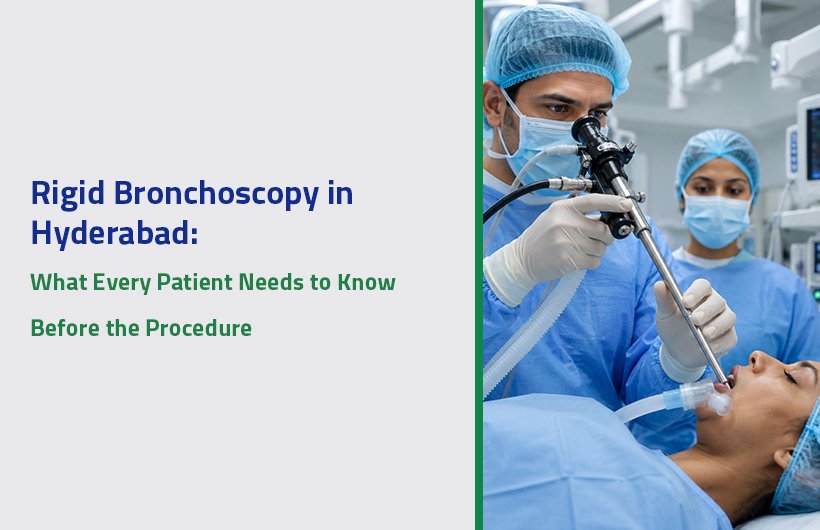
As Dr. Kunal Waghray, an interventional pulmonologist, I evaluate each patient’s airway anatomy using bronchoscopy when indicated, ensuring we target the exact site of obstruction rather than taking a one-size-fits-all approach.
Take the First Step Toward Restful, Healthy Sleep
Sleep apnea is not something you should learn to live with. Every night of untreated OSA takes a toll on your heart, lungs, and quality of life, often without you even realizing it.
If you or someone you love is showing signs of sleep apnea, I encourage you to seek a proper evaluation without delay. Early diagnosis makes treatment simpler, more effective, and far less disruptive to your daily life.
You can contact us to schedule a consultation at KIMS Sunshine Hospital or Respire Airway Clinics, Hyderabad, or reach out directly via WhatsApp for a quick appointment. As a Sleep Disorders Doctor in Hyderabad with specialized training in sleep medicine and interventional pulmonology, I am here to help you breathe better and sleep better starting today.
Book Your Appointment Today
Get expert orthopedic care with Dr. Kunal Waghary. Click here to schedule your consultation now.
Frequently Asked Questions About Sleep Apnea
Q:Can sleep apnea go away on its own?
In most adults, obstructive sleep apnea does not resolve without treatment. However, significant weight loss, positional changes, or treating nasal congestion can reduce severity in some patients. Medical evaluation is always recommended to determine the right course of action.
Q:Is snoring always a sign of sleep apnea?
Not all snoring indicates sleep apnea, but snoring accompanied by witnessed breathing pauses, choking sounds, or excessive daytime sleepiness is a strong warning sign. A sleep study is the only way to confirm a diagnosis.
Q:What happens if sleep apnea is left untreated?
Untreated OSA significantly increases the risk of high blood pressure, heart disease, stroke, type 2 diabetes, and pulmonary hypertension. It also causes chronic sleep deprivation, which impairs judgment, mood, and workplace performance.
Q:How long does CPAP therapy need to continue?
For most patients, CPAP is a long-term treatment much like blood pressure medication. However, if the underlying cause, such as obesity, is addressed, some patients can reduce or discontinue CPAP under medical supervision. Regular follow-up determines this.
Q:Is sleep apnea testing available in Hyderabad?
Yes. Both in-lab polysomnography and home sleep apnea testing are available in Hyderabad. At our clinic, we guide patients through the entire process, from initial consultation to test interpretation and treatment planning.
Q:Can children have sleep apnea?
A:Yes, children can develop OSA, often caused by enlarged tonsils or adenoids. Symptoms in children include mouth breathing, bedwetting, behavioral problems, and poor school performance. Pediatric OSA requires prompt evaluation and is highly treatable.