
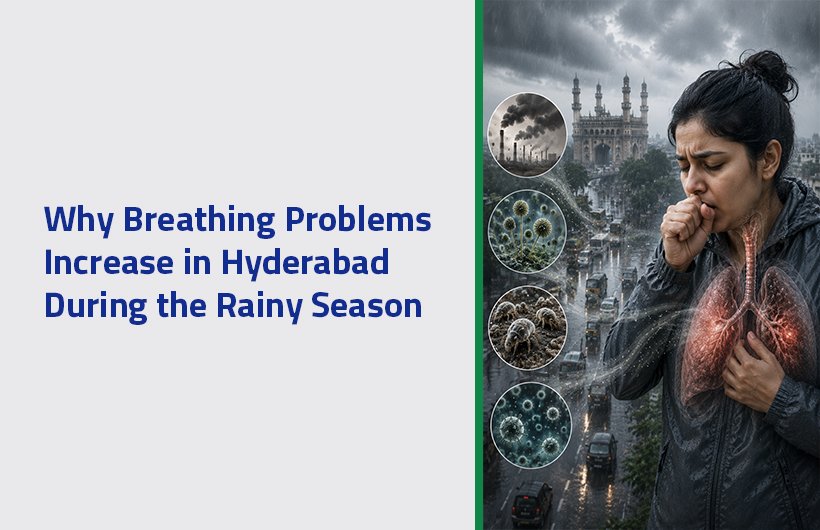


That wheeze that shows up every time the rains set in? It’s not your imagination, and it’s not “just seasonal weakness.” For a lot of people in Hyderabad, monsoon lung health becomes a real problem every year, not because the rain itself is harmful, but because of what humidity does to the air inside your home. If you’ve noticed your breathing gets worse the moment the clouds roll in, you’re far from alone, and a pulmonologist in Hyderabad can help you figure out exactly why.
Why Does Monsoon Weather Affect Breathing?
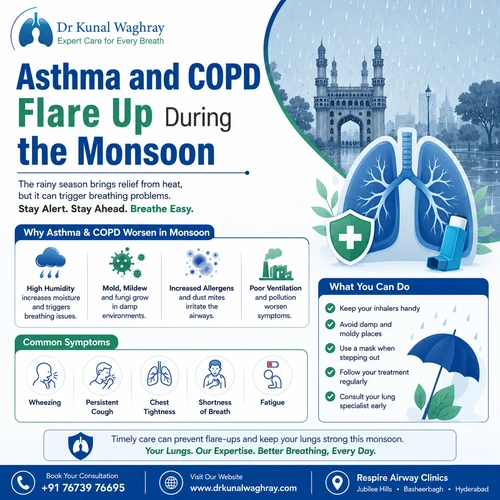
Humid air feels heavier because it is, it holds more moisture, and that moisture changes the air you breathe in several ways. High humidity causes dust mites and Mold spores to multiply faster indoors, especially in poorly ventilated bathrooms, kitchens, and storage areas. For people with asthma or airway sensitivity, these allergens are a direct trigger.
There’s also a mechanical piece to it. Moist, heavy air is simply harder to move in and out of inflamed airways. Even people without diagnosed asthma sometimes notice they feel “short of breath” on humid, overcast days, the air itself is doing more work to get in.
Why Asthma and COPD Flare Up During the Monsoon
If you already live with asthma or COPD, monsoon season tends to be one of the harder stretches of the year. Damp conditions encourage Mold growth in walls, curtains, and air conditioner filters, and Mold exposure is a well-documented asthma trigger. Add in the frequent temperature swings, stepping from a humid 28°C outdoors into an air-conditioned room and back out again, and airways that are already reactive get irritated repeatedly through the day.
COPD patients face a related problem: humid air makes mucus in the airways thicker and harder to clear, which is part of why chest infections tend to cluster during the monsoon months.
Monsoon Humidity and Hyderabad’s Air Quality: A Double Trigger
Here’s the part that’s specific to Hyderabad rather than monsoon weather in general. Many people assume rain “washes” pollution out of the air, and to some extent it does, right after a heavy downpour. But between showers, when it’s overcast and humid without actual rainfall, fine particulate matter can linger closer to the ground rather than dispersing. That means the same pollution sources we cover in our guide to air pollution in Hyderabad and lung health don’t take a break during monsoon, they combine with humidity to create a second layer of irritation for sensitive airways.
How Dr. Waghray Diagnoses and Treats Monsoon-Triggered Breathing Problems
Not every monsoon cough needs the same treatment, which is why getting an actual diagnosis matters more than guessing. Dr. Kunal Waghray typically starts with a detailed history, when symptoms started, whether they’re worse indoors or outdoors, and whether there’s a personal or family history of asthma or allergies. From there, a spirometry test or allergy evaluation can confirm whether what you’re dealing with is a true asthma flare, a Mold-related allergy, or a lingering chest infection that needs antibiotics rather than an inhaler.
This distinction matters. Treating a Mold allergy like a standard cold rarely helps, and treating a chest infection with only allergy medication can let it worsen. Getting the right diagnosis early usually means a faster, simpler recovery.
Practical Tips to Protect Your Lungs This Monsoon
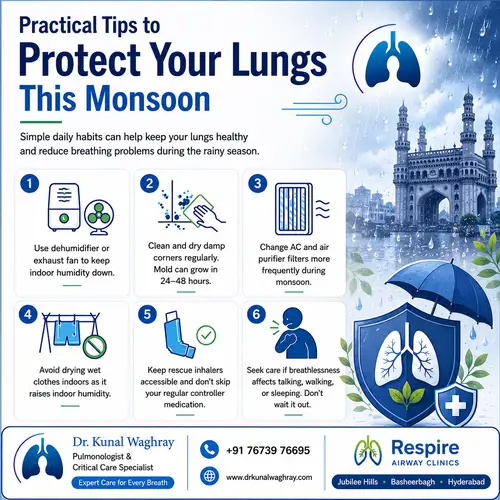
A few consistent habits make a real difference during the wet months:
- Run a dehumidifier or exhaust fan in bathrooms and kitchens to keep indoor humidity down and slow Mold growth.
- Clean and dry damp corners regularly, Mold needs only 24–48 hours of dampness to start growing on walls or fabric.
- Change AC and air purifier filters more frequently during monsoon, since they trap moisture along with dust.
- Avoid drying wet clothes indoors where possible, as this raises indoor humidity significantly.
- Keep rescue inhalers accessible if you have diagnosed asthma, and don’t skip your regular controller medication just because symptoms feel milder some days.
- Watch for warning signs, if breathlessness interferes with talking, walking, or sleeping, that’s a sign to seek care rather than wait it out.
The Bottom Line
Monsoon relief from Hyderabad’s heat often comes with a hidden cost for your lungs, humidity, Mold, and lingering pollution combine to make this one of the toughest seasons for asthma and COPD patients. The good news is that most of this is manageable with the right precautions and, when needed, the right diagnosis. If your breathing has been harder to manage this season, contact us to book a consultation, or reach out on WhatsApp with your symptoms and we’ll guide you on next steps.
Experiencing Breathing Problems This Rainy Season?
Don’t ignore persistent cough, wheezing, or shortness of breath. Consult Dr. Kunal Waghray, Pulmonologist & Critical Care Specialist in Hyderabad, for expert diagnosis and personalized treatment for monsoon-related respiratory conditions.
Frequently Asked Questions
Q: Why does my breathing get worse specifically on overcast, humid days?
A: Overcast humid weather traps pollutants closer to the ground and encourages Mold and dust mite growth, both of which can irritate sensitive airways more than clear, dry days.
Q: Can monsoon weather cause asthma in someone who’s never had it before?
A: Monsoon conditions are more likely to trigger symptoms in people who already have airway sensitivity or allergies, though some people are diagnosed with asthma for the first time after a bad seasonal flare-up prompts an evaluation.
Q: Is a monsoon cough always an infection?
A: No. It could be an infection, a Mold or dust allergy, or an asthma flare, each needs different treatment, which is why a proper evaluation matters if the cough lasts more than a week or two.
Q: Do air purifiers help during monsoon?
A: Yes, especially those with HEPA filters, as they can reduce indoor Mold spores and dust mite allergens that increase during humid months.
Q: When should I see a pulmonologist rather than wait out monsoon symptoms?
A: If breathlessness is affecting daily activities, if symptoms return every monsoon without improvement, or if you’re using a rescue inhaler more than twice a week, it’s time for an evaluation.
Disclaimer: This blog is for educational purposes only and is not a substitute for professional medical advice, diagnosis, or treatment. Every individual’s health condition is different, and symptoms described here may have multiple causes. Please consult Dr. Kunal Waghray or another qualified pulmonologist for an accurate diagnosis and personalized treatment plan before making any health decisions.