
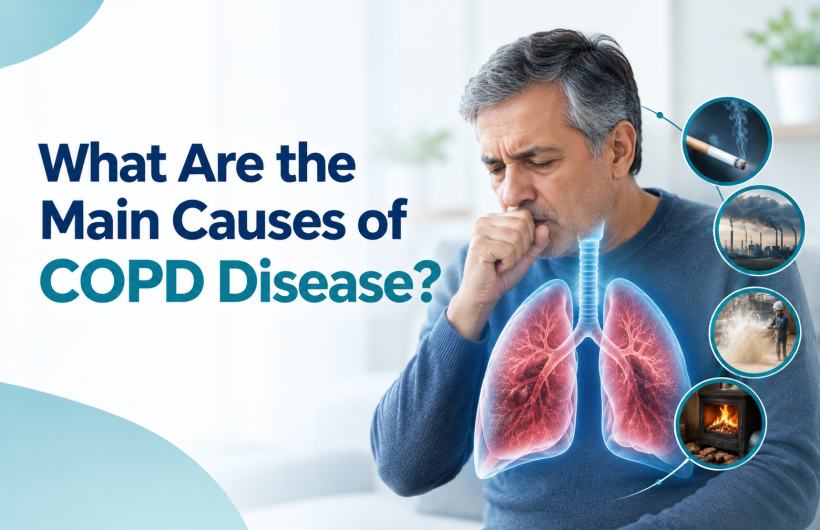
Have you ever wondered why some people develop breathing problems even if they have never smoked? The causes of COPD disease include smoking, air pollution, household cooking smoke, workplace dust and certain genetic conditions. Chronic obstructive pulmonary disease (COPD) is a long-term lung disease that makes breathing difficult.
In India, exposure to traffic pollution, dust and smoke from cooking fuels can increase the risk of lung problems. Understanding these risk factors can help you protect your lung health. If you have a persistent cough or breathlessness, consulting an expert pulmonologist in Hyderabad can help you understand the possible cause and get the right medical advice.
What Is COPD Disease?
COPD stands for chronic obstructive pulmonary disease. It is a long-term condition that affects the lungs and makes it difficult for air to move in and out normally.
COPD mainly includes two conditions:
- Chronic bronchitis: The airways become swollen and produce excess mucus, causing a long-term cough.
- Emphysema: The tiny air sacs in the lungs become damaged, making it harder for the body to get enough oxygen.
Some people have both conditions. COPD usually develops slowly over several years, and symptoms may become noticeable only after lung damage has progressed.
What Are the Main Causes of COPD Disease?
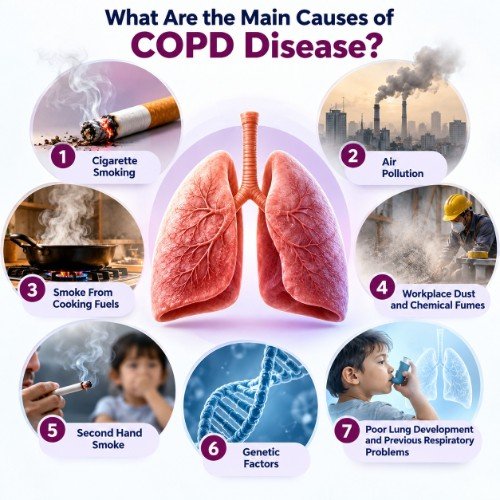
The main causes of COPD disease involve long-term exposure to substances that irritate and damage the lungs. Smoking is the leading cause, but several other factors can also contribute.
1.Cigarette Smoking
Smoking is one of the leading causes of COPD. Cigarette smoke contains harmful chemicals that damage the airways and the tiny air sacs in the lungs.
Over time, smoking can cause swelling in the airways, increase mucus production and make breathing more difficult.
Other forms of tobacco smoke can also increase the risk, including:
- Bidis and cigars
- Hookah or waterpipe smoke
- second hand tobacco smoke
The risk generally increases with longer and greater exposure. Stopping smoking is an important step in protecting the lungs from further damage.
2.Air Pollution
Long-term exposure to air pollution can increase the risk of COPD. Polluted air contains tiny particles and harmful gases that can enter the lungs and cause irritation.
Common sources include:
- Vehicle exhaust
- Industrial emissions
- Construction dust
- Smoke from burning waste
- Outdoor air pollution
People who live or work in areas with high pollution may experience repeated exposure. Although air pollution does not cause COPD in everyone, it can contribute to lung damage over time.
3.Smoke From Cooking Fuels
Household smoke is an important risk factor, particularly in places where wood, coal, crop residue or other solid fuels are used for cooking.
Burning these fuels releases smoke and fine particles. Poor kitchen ventilation can increase exposure, especially for people who spend several hours cooking every day.
Both women and men can develop breathing problems due to long-term exposure to household smoke.
Using cleaner cooking fuels and improving ventilation can help reduce this risk.
4.Workplace Dust and Chemical Fumes
Some jobs involve regular exposure to dust, smoke or chemicals that can harm the lungs.
People working in construction, mining, stone cutting, textile manufacturing and certain industrial settings may face a higher risk.
Long-term exposure can irritate the airways and contribute to lung damage. Smoking along with workplace exposure may increase the risk further.
Using suitable protective equipment and following workplace safety guidelines can help reduce exposure.
5.second hand Smoke
A person does not need to smoke to be affected by tobacco smoke. Breathing smoke from another person’s cigarette or other tobacco product is known as second-hand smoke exposure.
Repeated exposure at home, in vehicles or in enclosed spaces can harm lung health and may contribute to COPD risk.
Keeping indoor spaces smoke-free is an important way to protect family members.
6.Genetic Factors
In rare cases, COPD develops because of an inherited condition called alpha-1 antitrypsin deficiency.
This condition affects a protein that helps protect lung tissue from damage. People with a severe deficiency may develop COPD at a younger age, even if they have never smoked.
A doctor may consider genetic testing if COPD develops unusually early or there is a family history of the condition.
7.Poor Lung Development and Previous Respiratory Problems
Lung health can be affected by factors that occur during pregnancy, childhood or early adulthood.
Premature birth, poor lung development and certain serious respiratory infections may affect lung function later in life. These factors can increase the risk of COPD, particularly when combined with smoking or long-term exposure to pollution.
However, having a history of respiratory infections does not automatically mean a person will develop COPD.
Can You Develop COPD Without Smoking?
Yes, COPD can develop in people who have never smoked. Although smoking is a major cause, it is not the only risk factor.
Non-smokers may develop COPD due to:
- Long-term exposure to air pollution
- Smoke from cooking fuels
- second hand tobacco smoke
- Workplace dust and chemical fumes
- Genetic conditions such as alpha-1 antitrypsin deficiency
A person’s exposure history, symptoms and lung function are important when assessing the possibility of COPD.
What Are the Early Symptoms of COPD?
COPD often develops gradually. Early symptoms may be mistaken for normal ageing, tiredness or a minor respiratory problem.
Common warning signs include:
- Persistent cough
- Coughing up mucus or phlegm
- Breathlessness while walking or climbing stairs
- Wheezing or a whistling sound while breathing
- Chest tightness
- Frequent respiratory infections
- Tiredness during daily activities
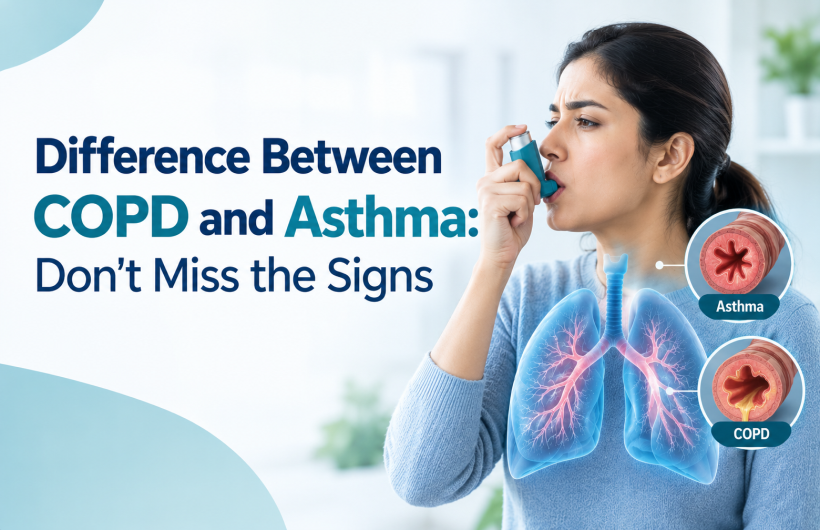
These symptoms can also occur in other conditions, including asthma. For example, asthma symptoms often vary over time, while COPD commonly causes persistent breathing difficulties that gradually worsen. However, symptoms alone cannot reliably distinguish the two conditions.
How Is COPD Diagnosed?
A doctor may suspect COPD based on your symptoms, smoking history and exposure to smoke, dust or pollution. However, a medical assessment and lung function testing are needed to confirm the diagnosis.
Spirometry is the main test used to diagnose COPD. During this test, you breathe into a machine that measures how much air you can blow out and how quickly you can do it.
Depending on your symptoms, the doctor may also recommend a chest X-ray, CT scan or other tests.
Early diagnosis can help guide treatment and reduce the risk of complications.
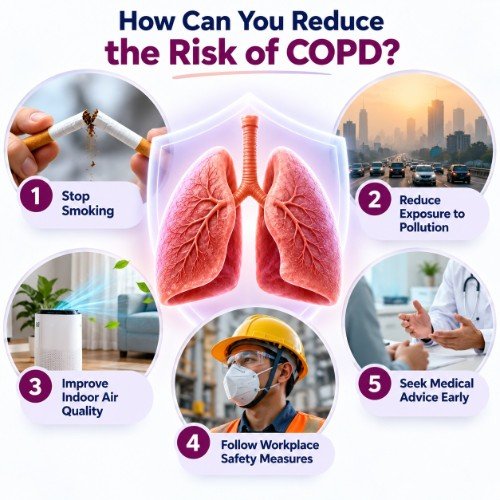
How Can You Reduce the Risk of COPD?
Although not every case can be prevented, you can take steps to protect your lungs.
Stop Smoking
Avoid cigarettes, bidis and other tobacco products. If you smoke, seek support to help you quit.
Reduce Exposure to Pollution
Avoid unnecessary exposure to heavy traffic fumes, industrial smoke and dust. Follow local air-quality advice during periods of high pollution.
Improve Indoor Air Quality
Use cleaner cooking fuels where possible and ensure that kitchens have proper ventilation. Avoid burning waste in enclosed areas.
Follow Workplace Safety Measures
Use appropriate protective equipment when working around dust, smoke or chemicals. Follow workplace ventilation and safety guidelines.
Seek Medical Advice Early
Do not ignore a persistent cough, wheezing or breathlessness. Early medical evaluation can help identify the cause and determine whether lung function testing is needed.
When Should You Consult a Pulmonologist?
Consult a lung specialist if you have a persistent cough, regular mucus production, wheezing or breathlessness during everyday activities, especially if you smoke or have long-term exposure to dust or smoke.
Dr. Kunal Waghray is a Pulmonologist and Critical Care Specialist who evaluates and manages respiratory conditions.
If you have been diagnosed with advanced COPD, treatment may help control symptoms and improve your quality of life. The available options depend on your condition and overall health. You can find information about advanced COPD treatment to understand the available approaches.
Meet Dr. Kunal Waghray, Pulmonologist & Critical Care Specialist in Hyderabad
Get expert care for bronchiectasis and other respiratory conditions. Schedule a consultation with Dr. Kunal for personalized diagnosis and treatment.
Conclusion
The causes of COPD disease include smoking, air pollution, household cooking smoke, workplace dust, chemical fumes and certain genetic conditions. COPD can also affect people who have never smoked.
Avoiding harmful exposure and recognising early symptoms can help protect your lung health. If you experience persistent coughing or breathlessness, consult a qualified pulmonologist for proper evaluation and treatment.
Frequently Asked Questions
- What is the main cause of COPD?
Smoking is the leading cause of COPD. Long-term exposure to air pollution, cooking smoke, workplace dust and chemical fumes can also contribute.
- Can non-smokers develop COPD?
Yes. Non-smokers can develop COPD due to pollution, household smoke, workplace exposure or certain genetic conditions.
- Can COPD be caused by air pollution?
Yes. Long-term exposure to polluted air can damage the lungs and increase the risk of COPD.
- Is COPD hereditary?
Most COPD cases are not directly inherited. However, alpha-1 antitrypsin deficiency is a rare genetic condition that can cause COPD.
- Can asthma turn into COPD?
Asthma does not automatically turn into COPD. They are different conditions, although some people can have both. A doctor may use spirometry and other clinical information to distinguish them.
- Can COPD be cured?
COPD has no established cure, but treatment can help control symptoms, improve daily functioning and reduce flare-ups.
Medical disclaimer: This article is for general educational purposes only. It does not replace professional medical advice, diagnosis or treatment.