
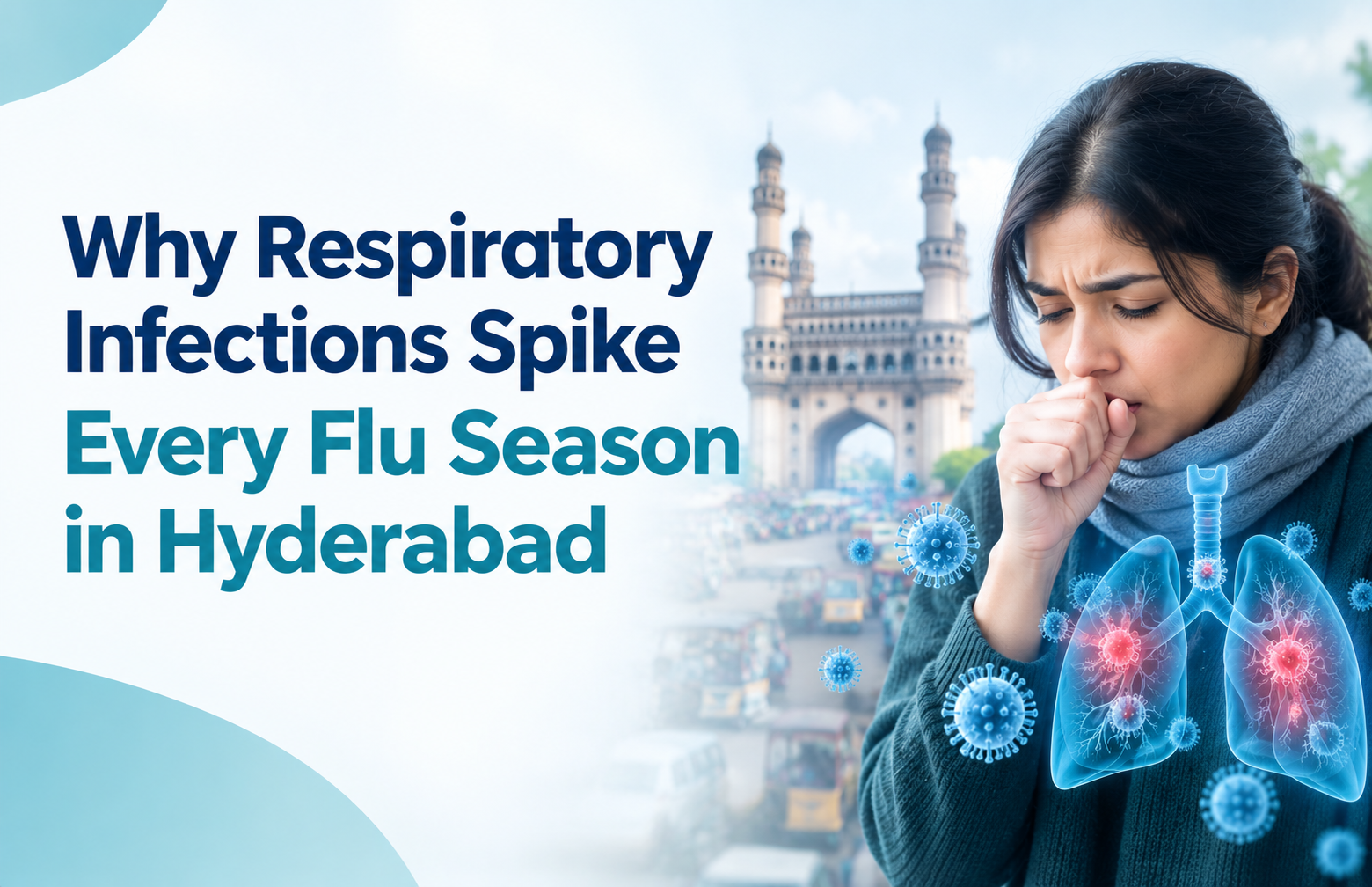


Every year, around this time, clinics across Hyderabad get busier. More people walk in with a cough, a sore throat, or trouble breathing. This is not a coincidence. Flu season respiratory infections go up every year, and this year is no different. In fact, cities like Bengaluru have already reported a big jump in flu cases this month, along with more smoke in the air from festival crackers. Dr. Kunal Waghray, a pulmonologist in Hyderabad at KIMS – Sunshine Hospital, Begumpet, sees this same pattern every year, and he says there’s a simple reason why flu season respiratory infections hit so many people at once.
Why Do Flu Season Respiratory Infections Rise So Fast?
There are a few simple reasons why flu season respiratory infections spread quickly at this time of year:
- Cooler weather helps viruses survive longer in the air and on surfaces
- Dry air irritates the nose and throat, making it easier for germs to get in
- Festival smoke and firecrackers add extra pollution to the air, which weakens the lungs’ natural defense
- People spend more time indoors, in crowded rooms with less fresh air
- The flu virus itself is more active in cooler months, leading to flu waves
When all these things happen together, like they are right now, flu season respiratory infections can spread much faster than usual. This is why doctors see more patients with cough, cold, and breathing trouble during October and November.
Who Should Be Extra Careful This Season?
Flu season respiratory infections don’t affect everyone the same way. Some people are more likely to get seriously sick:
- People with asthma or COPD
- Children under 5 years
- Elderly adults
- People with diabetes or heart problems
- Anyone who already has a weak immune system
If you or a loved one fits into one of these groups, it’s smart to be a little more careful this month, not scared, just careful.
What Are the Early Signs You Should Not Ignore?
Most coughs and colds go away on their own in a few days. But some signs mean you should see a doctor sooner rather than later. Watch out for:
- A fever that lasts more than 3 days
- Breathlessness, even with light activity
- Chest pain or chest tightness
- A cough that brings up yellow or green mucus
- Feeling very tired, more than usual
- Wheezing or a whistling sound while breathing
If you notice two or more of these signs, it’s best to get checked rather than wait it out. Flu season respiratory infections can get worse quickly, especially for people with existing lung conditions.
Does Pollution Make Flu Season Worse?
This is something many people don’t think about. Flu season respiratory infections are not just about the virus itself. Polluted air also plays a big role. When the air has more smoke and dust, your lungs have to work harder. This makes it easier for viruses to cause real damage.
Festival smoke, especially from firecrackers, adds a large amount of harmful particles to the air in a very short time. Combined with a flu wave, this creates the perfect storm for more flu season respiratory infections across the city. This is exactly why Dr. Waghray recommends checking the air quality before stepping out during this time of year, not just managing symptoms after they start.
How Can You Protect Yourself This Flu Season?
You don’t need anything complicated to lower your risk. A few simple habits go a long way:
- Wash your hands often, especially after being outside
- Wear a mask in crowded places or on high-pollution days
- Stay indoors during early morning and evening hours when pollution is highest
- Drink warm fluids to keep your throat moist and comfortable
- Get your flu shot, especially if you’re in a high-risk group
- Avoid close contact with anyone who already has a cough or fever
People who already get sick often, year after year, may also want to read about why some people keep getting lung infections and what can be done about it.
When Should You See a Pulmonologist?
Most flu season respiratory infections are mild and get better with rest, fluids, and simple home care. But you should see a pulmonologist if:
- Your symptoms last more than 10 days without improving
- You have ongoing breathlessness
- You have a chronic lung condition like asthma or COPD and your symptoms are flaring up
- Your fever keeps coming back after going away
Getting checked early is always better than waiting for things to become serious.
The Takeaway
Flu season respiratory infections are common at this time of year, but they don’t have to catch you off guard. A few simple habits, like wearing a mask, washing your hands, and watching the air quality, can make a real difference. If your cough or breathing trouble isn’t improving, don’t wait it out. Dr. Kunal Waghray sees patients at KIMS – Sunshine Hospital, Begumpet, Monday to Saturday. Contact us to book a check-up, or WhatsApp us if you have a quick question first.
Meet Dr. Kunal Waghray, Pulmonologist & Critical Care Specialist in Hyderabad
Get expert care for bronchiectasis and other respiratory conditions. Schedule a consultation with Dr. Kunal for personalized diagnosis and treatment.
Frequently Asked Questions
Q: Why do flu season respiratory infections happen every year around this time?
A: Cooler, drier air, more time spent indoors, and rising pollution from festival smoke all combine to help viruses spread faster during this season.
Q: Is this year’s flu wave worse than usual?
A: Some cities are already seeing a sharp rise in cases this month. It’s a good idea to take precautions early rather than wait and see.
Q: Can air pollution alone cause flu-like symptoms?
A: Pollution itself doesn’t cause the flu, but it does irritate your airways and weaken your lungs’ defenses, making it easier for a real infection to take hold.
Q: Should healthy people also worry about flu season respiratory infections?
A: Healthy people usually recover without major problems, but it’s still smart to follow simple precautions, since infections can spread quickly in crowded places.
Q: When is a cough serious enough to see a doctor?
A: If your cough lasts more than 10 days, comes with breathlessness, chest pain, or a fever that won’t go away, it’s time for a proper check-up.
This content is for educational purposes and isn’t a substitute for an in-person medical consultation. Please see a pulmonologist for diagnosis and treatment tailored to your condition.