
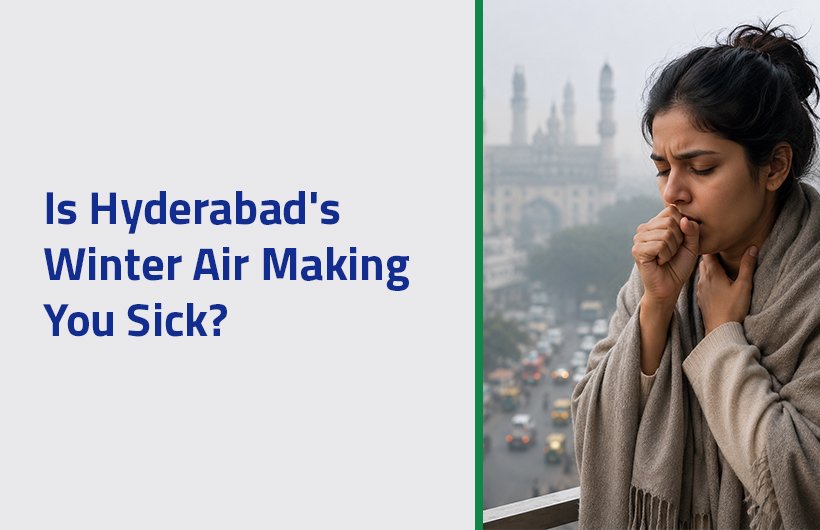


That cough that started in November and still hasn’t cleared? It may not be a leftover cold. For many Hyderabad residents, especially those already managing asthma patients or recurring chest issues, winter air is a genuine medical trigger.
If your symptoms are worsening between October and February, you’re not imagining it. Seeing an asthma specialist doctor in Hyderabad during this window isn’t being overly cautious; it’s the right call. As a pulmonologist in Hyderabad, I see this pattern repeated every single winter. Here’s what’s going on.
Why Hyderabad’s Winter Air Is Different from the Rest of the Year
Hyderabad has a pollution problem that most residents have learned to live with. But winter makes it significantly worse.
From November to February, the city’s average AQI regularly climbs into the 150–200 range. In areas like Sanath Nagar, Gachibowli, Old City, Punjagutta, and Somajiguda, it spikes further. During Diwali week, particulate matter concentrations can jump by 30–40% in a matter of hours.
Why does it get so bad in winter specifically?
It comes down to a phenomenon called temperature inversion. Normally, warm air near the ground rises, carrying pollutants upward and dispersing them. In winter, nighttime temperatures drop sharply, and a layer of cold air gets trapped near the surface with a band of warmer air sitting above it. The cold air can’t rise. Neither can the pollution.
Traffic fumes, construction dust from Hyderabad’s 300+ active major development sites, and industrial emissions from areas like Patancheru and Jeedimetla all remain trapped at ground level, where people are breathing.
The result: Hyderabad’s current PM2.5 concentrations are running nearly 7 times higher than WHO safe limits. And for anyone with sensitive airways, that matters enormously.
What This Air Does to Your Lungs
PM2.5 fine particulate matter is the most dangerous element in this mix. These particles are small enough to bypass your nose and throat entirely and travel straight into the deep lung tissue.
Once there, they don’t just irritate. They trigger the immune response that causes airway inflammation, which is the same mechanism behind an asthma attack. For patients who have their asthma under reasonable control most of the year, a high-pollution week in December can undo months of progress.
The most common patterns I see in the clinic during winter:
- Asthma patients needing reliever inhalers far more frequently than usual
- Patients with no prior asthma diagnosis developing first-time wheeze or chest tightness, sometimes called adult-onset asthma
- Chronic dry cough that patients assume is a cold but has no fever, no sore throat, and doesn’t resolve with antibiotics
- Sleep disruptions from overnight coughing, since pollution concentrations are highest after sunset when temperature inversions intensify
If your child’s school bag constantly has an inhaler in it this time of year, or if your own morning cough is becoming a routine, the air is likely playing a significant role.
The Pollution-Asthma Connection: More Than Just “Bad Air Days”
One question I hear often: “My asthma was fine in September. Why is it acting up now if I haven’t changed anything?”
You haven’t changed anything, but the environment has. Air quality data from Hyderabad hospitals consistently shows a 30% increase in respiratory complaints when the city’s AQI crosses 150. That threshold gets breached routinely every winter, often for weeks at a stretch.
What makes this particularly difficult is the lag effect. You don’t always react to pollution spikes the same day. Inflammation builds over days. A patient might have a bad asthma week in December and not realize it was directly caused by the Diwali pollution from the previous week.
This delayed pattern also means patients often dismiss the connection. “I was fine on Diwali night” yes, but your airways may have been responding to it for the next five to seven days.
Practical Steps That Actually Help
I want to be honest here: these measures reduce exposure, but they don’t eliminate it. If you have moderate to severe asthma, managing pollution exposure alone is never enough.
That said, here’s what genuinely makes a difference:
Check the AQI before going out. Real-time data is available on apps like IQ Air. When it crosses 150, limit time outdoors, especially morning exercise, which brings heavy breathing in peak pollution hours.
Avoid areas with heavy construction or traffic during winter. In Hyderabad right now, that’s difficult, but it matters most for patients who walk or cycle.
Keep windows closed at night. Temperature inversions are worse after sunset. Overnight exposure in a room with an open window can mean hours of concentrated PM2.5 exposure without realizing it.
Don’t skip your preventer inhaler in winter. This is the most common mistake. Patients feel fine on a good air day and start skipping doses. When the next pollution spike comes, there’s no buffer.
If you’d like to build up your lung capacity alongside managing pollution triggers, our guide on breathing exercises for lung health covers techniques you can do at home.
When the Cough Isn’t Going Away: When to See a Doctor
A cough lasting more than three weeks deserves medical attention regardless of the season. In winter, I’d lower that threshold further.
Here are the signs that point to something beyond a seasonal cold:
- Cough that comes dry, without fever or body aches
- Symptoms that worsen on high-pollution days and ease slightly when you stay indoors
- Waking up at night to cough
- Feeling short of breath during an activity that didn’t tire you
- Wheezing or chest tightness that comes and goes
For patients who already have a diagnosis, watch for: needing your reliever inhaler more than twice a week, waking more than once a night due to symptoms, or any limitation on your normal activity level. These are signs your asthma isn’t controlled, and winter pollution is frequently the culprit.
You can also read more about warning signs that mean it’s time to see a pulmonologist, including symptoms that are often dismissed for too long.
Dr. Kunal Waghray sees patients for respiratory and asthma concerns at KIMS – Sunshine Hospital, Begumpet, Monday to Saturday, 9 AM to 5 PM.
Conclusion
Hyderabad’s winter pollution isn’t a background inconvenience for patients with asthma, COPD, or sensitive airways; it’s a direct clinical trigger. Understanding the temperature inversion cycle, knowing which symptoms to watch for, and acting before things escalate can make a real difference in how you get through the colder months.
If your breathing has changed this season, don’t wait for it to resolve on its own. Contact us to book a consultation or reach out to our clinic on WhatsApp for a quicker response.
Need Expert Pulmonology Care?
If you’re experiencing persistent cough, breathlessness, asthma,
COPD, sleep apnea, or any other lung-related condition,
consult Dr. Kunal Waghray for expert diagnosis and personalized treatment.
Frequently Asked Questions
Q: Can Hyderabad’s air pollution cause asthma in someone who never had it before?
A: Yes. Long-term or repeated exposure to high PM2.5 concentrations can trigger airway inflammation in people with no prior history of asthma; this is called adult-onset asthma. If you’re developing a new cough or wheeze in adulthood, it’s worth a pulmonology assessment.
Q: My inhaler is helping less than it used to. Is that because of winter pollution?
A: Possibly. High pollution increases airway inflammation significantly, which can reduce how well bronchodilator inhalers control symptoms. It doesn’t mean your inhaler is faulty; it may mean your preventive treatment needs to be reviewed for winter.
Q: Are children more at risk from Hyderabad’s winter pollution than adults?
A: Yes. Children’s lungs are still developing, and PM2.5 particles penetrate more easily into smaller airways. Children with asthma or who live in high-pollution areas like Gachibowli or Sanathnagar need closer monitoring between November and February.
Q: Does wearing a mask help with PM2.5 exposure?
A: A standard surgical mask offers minimal protection against PM2.5. An N95 mask, worn correctly and consistently, filters out a significant portion of fine particles. It’s a reasonable precaution on very high-AQI days, particularly for asthma patients.
Q: I don’t smoke. Why do I have a chronic cough every winter?
A: Non-smokers can develop a persistent winter cough due to pollution-triggered airway inflammation, post-nasal drip from dry cold air, or an undiagnosed asthma variant called cough-variant asthma. A spirometry test can give clarity.
Q: When is the worst time of day for pollution in Hyderabad in winter?
A: Early morning (before 8 AM) and after sunset are generally the worst, as temperature inversions are strongest overnight. Midday, when temperatures rise and air mixes vertically, tends to be the cleaner window for outdoor activity.
Disclaimer: This article is for informational purposes only and does not constitute medical advice. Always consult a qualified medical professional for diagnosis and treatment of respiratory conditions.