


The lung transplant success rate in India varies depending on the patient’s health, the underlying lung disease, and the transplant centre’s experience. Published Indian studies have reported one-year survival rates of around 78% to 86% in specific patient groups. These figures show that lung transplantation can be a life-saving treatment for selected patients with advanced lung disease, but they should not be treated as a nationwide survival estimate.
A lung transplant replaces one or both severely damaged lungs with healthy donor lungs. It may help patients breathe more comfortably, improve their quality of life, and live longer when other treatments are no longer effective.
Understanding lung transplant survival rates, possible complications, and long-term care can help patients and their families make informed decisions.
What Is the Lung Transplant Success Rate in India?
The lung transplant success rate describes how patients fare after receiving a lung transplant. Doctors assess outcomes by looking at survival, lung function, complications, and quality of life.
Indian medical studies have reported encouraging results, although the available figures come from individual hospitals and selected groups of patients.
For example, a study published in 2021 examined 132 patients who underwent single-lung, double-lung, or combined heart-lung transplantation across three centres in India. It reported the following survival rates:
| Time after transplantation | Reported survival rate |
| 1 month | 85% |
| 1 year | 78% |
| 3 years | Approximately 70% |
The one-month and one-year figures come from the published study. The three-year estimate is reported in subsequent research discussing the Indian multicenter cohort.
These results are specific to the patients and transplant centers included in the research. They do not represent the survival rate of every lung transplant patient in India.
There is no single percentage that can accurately predict the outcome for every patient. A transplant specialist can explain how the patient’s age, lung disease, overall health, and treatment plan may affect the likely outcome.
What Is the One-Year Survival Rate After a Lung Transplant in India?
One-year survival is an important measure of early outcomes after lung transplantation.
The Indian multicenter study mentioned above reported a one-year survival rate of 78%. Another Indian study, published in the Indian Journal of Thoracic and Cardiovascular Surgery, reported one-year survival of approximately 89% in a large transplant programme.
The difference between these results highlights why survival rates must be interpreted carefully. The studies involved different patient groups, transplant programmes, and clinical circumstances.
During the first year, doctors closely monitor patients for:
- Infection.
- Acute rejection of the transplanted lungs.
- Surgical complications.
- Changes in lung function.
- Side effects of anti-rejection medicines.
Regular follow-up and early treatment of complications are essential during this period.
What Is the Five-Year Survival Rate After a Lung Transplant in India?
The five-year survival rate depends on the patient group and transplant programme being studied.
An Indian review published in 2023 discussed international registry data showing approximately 85% one-year survival and 59% five-year survival among adult lung transplant recipients who underwent surgery from 2010 onwards. These are international figures, not a nationwide Indian estimate.
Indian studies have reported outcomes from individual centers, but their findings should not automatically be combined to produce a national five-year survival rate.
For patients and families, the most useful approach is to ask the transplant team about its published outcomes, the patient’s individual risk factors, and the expected long-term care requirements.
How Long Can a Person Live After a Lung Transplant?
There is no fixed life expectancy after a lung transplant. Some patients live for many years after surgery, while others experience serious complications that affect their long-term survival.
The outcome depends on several factors, including:
- The patient’s age and overall health.
- The lung disease that led to transplantation.
- The function of the transplanted lungs.
- The risk of infection and rejection.
- The development of chronic lung graft dysfunction.
- Access to regular specialist care and prescribed medicines.
A lung transplant can offer a significant benefit to people with end-stage lung disease. However, it is not a permanent cure, and patients need lifelong medical follow-up.
The transplant team can provide a more meaningful estimate after reviewing the patient’s condition and medical history.
Who May Need a Lung Transplant?
A lung transplant may be considered when a person’s lung disease becomes severe and continues to progress despite appropriate medical treatment.
Conditions that may lead to a transplant evaluation include:
- Pulmonary fibrosis: Scarring of the lungs that makes breathing difficult.
- Chronic obstructive pulmonary disease (COPD): A long-term condition that limits airflow.
- Pulmonary hypertension: High blood pressure in the blood vessels of the lungs.
- Cystic fibrosis: An inherited condition that can cause severe lung damage.
- Other advanced lung diseases: Selected conditions that cause irreversible lung failure.
Not everyone with severe lung disease needs a transplant. A specialist assesses the severity of the condition, other medical problems, and the potential benefits and risks of surgery.
Patients whose breathing problems continue to worsen should consult an Expert Pulmonologist in Hyderabad to understand their treatment options.
Consultation with a Pulmonologist and Critical Care Specialist in Hyderabad can help patients understand the need for further investigations, specialist treatment, or referral to a transplant centre.
What Factors Affect the Lung Transplant Success Rate?
Several factors influence the outcome of lung transplantation. Understanding them helps patients prepare for treatment and long-term care.
1. The Patient’s Overall Health
Doctors assess the patient’s heart function, kidney function, nutritional status, physical fitness, and other medical conditions before surgery.
Some health problems can increase surgical risks or make recovery more difficult. The transplant team evaluates these concerns when deciding whether transplantation is appropriate.
2. The Underlying Lung Disease
The condition that damaged the lungs can influence the patient’s recovery and long-term outcome.
For example, patients with pulmonary fibrosis, COPD, and pulmonary hypertension may have different medical needs before and after surgery.
3.The Type of Transplant
Some patients receive a single lung transplant, while others need both lungs replaced. In selected cases, a combined heart-lung transplant may be required.
The choice depends on the underlying disease, heart function, and overall clinical assessment. A double lung transplant is not automatically the best option for every patient.
4. Infection and Rejection
After transplantation, the immune system may recognize the donor lungs as foreign tissue and attempt to attack them. This is known as rejection.
Patients also have an increased risk of infection because anti-rejection medicines suppress parts of the immune system.
Regular monitoring helps doctors identify and manage these complications.
5. Medication and Follow-Up Care
Patients generally need immunosuppressant medicines for life to reduce the risk of rejection.
Missing doses or stopping medication without medical advice can put the transplanted lungs at risk. Regular consultations and lung function tests help doctors monitor recovery and adjust treatment.
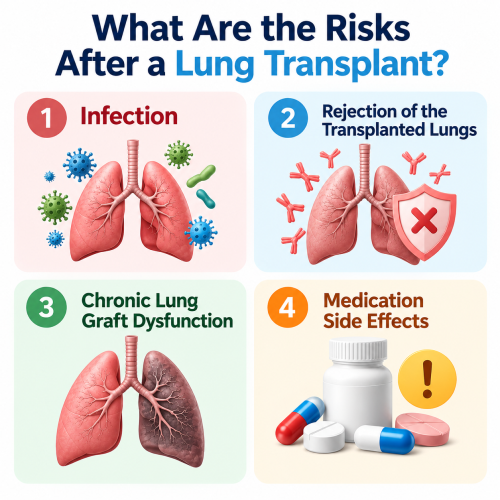
What Are the Risks After a Lung Transplant?
Although lung transplantation can be lifesaving, it is a major operation with possible complications.
Infection
Patients taking immunosuppressant medicines are more vulnerable to certain infections. Following medical advice about hygiene, vaccinations, food safety, and avoiding infectious exposure can help reduce risk.
Fever, worsening cough, or new breathing difficulties should be reported promptly to the treating team.
Rejection of the Transplanted Lungs
Rejection can occur when the immune system attacks the donor lungs. It may develop early or later in the recovery period.
Some episodes can be treated successfully, but rejection requires prompt medical assessment.
Chronic Lung Graft Dysfunction
Some patients develop a long-term decline in the function of their transplanted lungs. This may cause worsening breathlessness and reduced exercise capacity.
Regular monitoring is important because early symptoms may be subtle.
Medication Side Effects
Anti-rejection medicines can cause side effects, including kidney problems, high blood pressure, and diabetes. Doctors monitor patients and adjust treatment when necessary.
Patients should never stop or change these medicines without medical advice.
How Can Patients Improve Recovery After a Lung Transplant?
Following the treatment plan can help patients protect their transplanted lungs and support recovery.
Important steps include:
- Take prescribed medicines regularly: Do not change doses or stop treatment without consulting the transplant team.
- Attend follow-up appointments: Regular assessments help detect infection, rejection, and changes in lung function.
- Follow the rehabilitation programme: Prescribed exercises and physiotherapy can help improve strength and stamina.
- Maintain a balanced diet: Follow the nutritional advice provided by the healthcare team.
- Avoid smoking and second-hand smoke: Protecting the transplanted lungs is essential.
- Reduce infection risks: Follow advice about hygiene, vaccinations, food safety, and contact with people who are unwell.
- Report new symptoms early: Seek medical advice for fever, persistent cough, worsening breathlessness, or a sudden decline in exercise capacity.
Recovery differs from one patient to another. The transplant team will advise when it is safe to increase physical activity and return to normal daily routines.
Does a Lung Transplant Improve Quality of Life?
Many patients experience an improvement in breathing and daily functioning after a successful lung transplant.
Before surgery, advanced lung disease may make walking, climbing stairs, sleeping, or performing routine activities difficult. After transplantation and rehabilitation, some patients find these activities easier.
Some may also need less supplemental oxygen, depending on their condition and lung function.
However, patients must continue taking prescribed medicines and attending regular appointments. A lung transplant can improve quality of life, but it does not remove the need for ongoing medical care.
When Should You Consult a Pulmonologist?
Patients with advanced lung disease should seek specialist advice when their symptoms continue to worsen despite treatment, their oxygen requirements increase, or everyday activities become increasingly difficult.
A pulmonologist can assess the underlying condition, review treatment options, and determine whether a transplant evaluation may be appropriate.
For patients with suspected lung cancer, doctors may recommend imaging, bronchoscopy, or other investigations depending on the clinical findings. Learn more about Lung Cancer Related Services.
In selected patients, endobronchial ultrasound (EBUS) can help doctors examine structures within the chest and obtain samples from lymph nodes or other areas. Read more about EBUS (Linear and Radial) .
These investigations serve different diagnostic purposes and do not independently determine whether a patient is eligible for a lung transplant.
Conclusion
The lung transplant success rate in India varies between patients and transplant centers. Published Indian studies show that many selected patients survive the first year after surgery, while long-term outcomes depend on several medical factors.
Survival statistics can help patients understand general outcomes, but they cannot predict exactly how long an individual will live after transplantation.
If you or a family member has advanced lung disease, consult a qualified pulmonologist to understand the available treatment options and whether a lung transplant evaluation may be appropriate.
Meet Dr. Kunal Waghray, Pulmonologist & Critical Care Specialist in Hyderabad
Get expert care for bronchiectasis and other respiratory conditions. Schedule a consultation with Dr. Kunal for personalized diagnosis and treatment.
Sources used for Indian survival data
1. Indian study: Challenges and postoperative outcomes after lung transplantation
2. Lung transplantation in India: Review and current scenario
3. Indian multicentre outcomes discussed in recent research
Important publishing note: The Indian survival figures above come from specific published studies and should not be described as the current national success rate. The five internal links you provided have all been retained and placed in relevant sections.
Medical disclaimer: This article is for educational purposes only and should not replace professional medical advice, diagnosis, or treatment. Lung transplant eligibility, risks, and expected outcomes must be assessed individually by a qualified medical and transplant team.