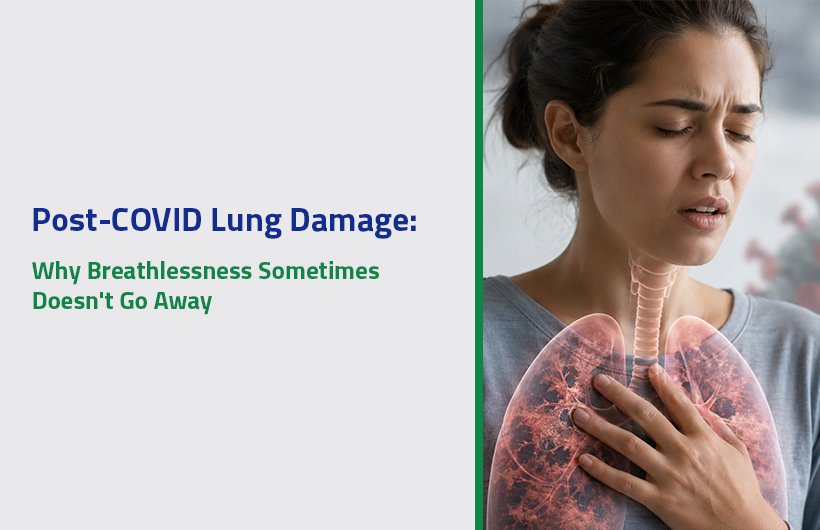
If it’s been months, or even a year or two, since your COVID infection cleared, but you’re still getting breathless climbing stairs or finishing a short walk, you’re not imagining it. Post-COVID lung damage is a real and common reason breathing doesn’t fully return to normal, even in people who had a “mild” case at the time. Getting proper treatment for post-COVID lung damage in Hyderabad starts with understanding what’s happening inside your lungs, rather than assuming you just need more time. Dr. Kunal Waghray, a pulmonologist in Hyderabad at KIMS – Sunshine Hospital, Begumpet, continues to see patient’s years after their original infection who are only now getting a proper explanation for symptoms, they’d stopped mentioning to anyone.
What Is Post-COVID Lung Damage?
Post-COVID lung damage refers to lasting changes in lung tissue or lung function that persist after the infection itself has cleared. During a COVID infection, the virus can inflame and injure the air sacs and small airways in the lungs. In most people, this heals completely. In some, especially after a more severe illness, the healing process leaves behind scar tissue, a process doctors call pulmonary fibrosis or leads to ongoing inflammation that keeps the lungs working less efficiently than before.
This is different from simply feeling unfit after being sick. True post-COVID lung damage shows measurable changes, reduced oxygen exchange, altered breathing patterns, or visible scarring on imaging, that explain why symptoms haven’t resolved the way a typical viral illness would.
Why Does Breathlessness Linger So Long After Recovery?
There are usually three overlapping reasons breathlessness continues well after someone has technically “recovered”:
- Residual lung scarring (fibrosis) from the original inflammation, which can restrict how well the lungs expand
- General deconditioning, especially after a long illness or hospitalisation, where reduced stamina gets mistaken for lung damage or vice versa
- An underlying condition unmasked by COVID, such as mild asthma or early COPD that was manageable before infection but became noticeable afterward
Sorting out which of these is driving your symptoms matters a lot, because the right next step is different for each one. Deconditioning improves with structured activity. Fibrosis needs monitoring and sometimes specific treatment. An unmasked condition needs its own diagnosis and management plan.
Who’s Most Likely to Develop Post-COVID Lung Damage?
Not everyone who’s had COVID goes on to develop lasting lung changes, but the risk is higher in certain groups:
- Patients who needed oxygen support or ICU care during their initial illness
- Older adults, particularly those with pre-existing heart or lung conditions
- People with diabetes or other conditions that slow tissue healing
- Patients who had a prolonged fever or illness course, even without hospitalisation
- A smaller group who had a relatively mild initial illness but still developed lingering symptoms, for reasons that aren’t always fully clear
If you fall into one of the higher-risk groups and still notice breathlessness, fatigue, or reduced exercise tolerance, it’s worth getting evaluated rather than assuming it will resolve on its own.
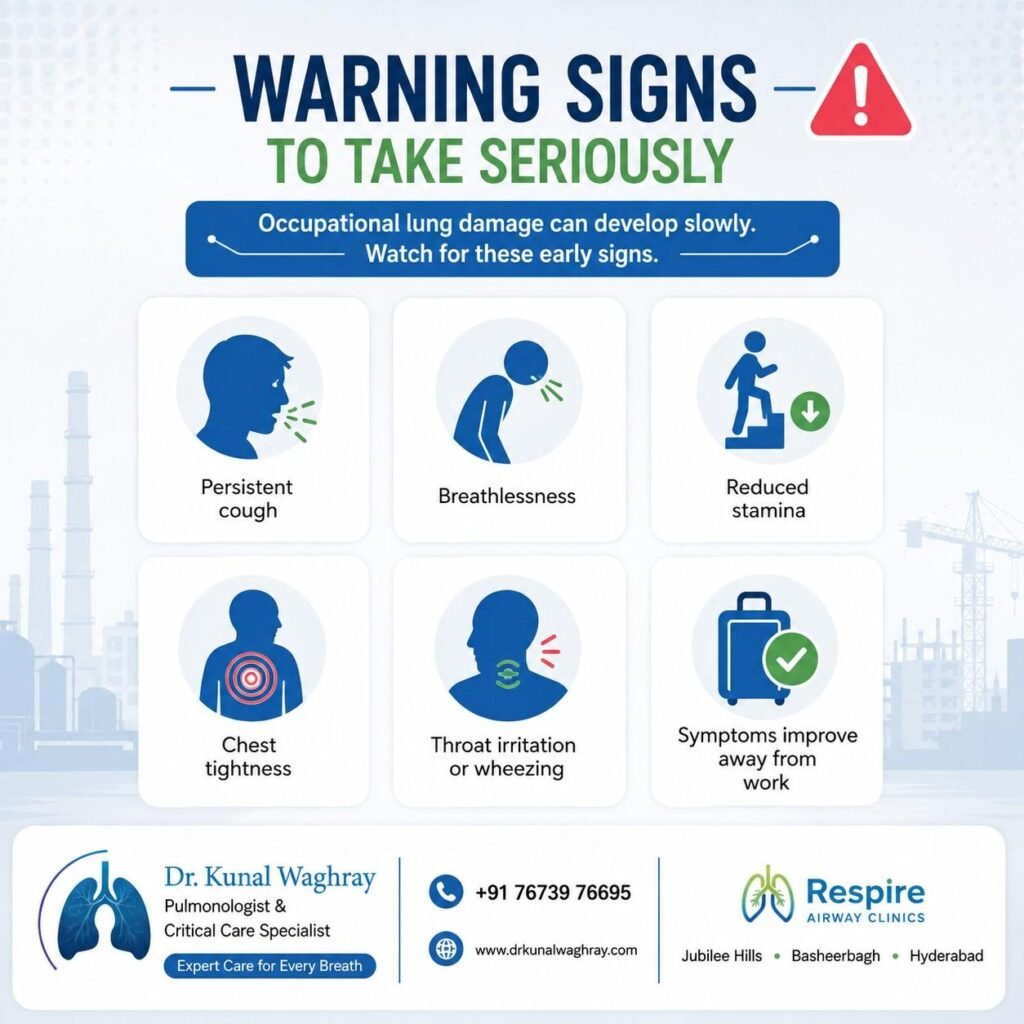
Warning Signs Post-COVID Lung Damage Shouldn’t Be Ignored
Some breathlessness after illness is expected during recovery. These signs suggest something more may be going on:
- Breathlessness that hasn’t meaningfully improved after three or more months
- A dry cough that persists well beyond the original infection
- Noticeably reduced stamina compared to your pre-COVID baseline
- Chest tightness or discomfort during normal activity
- Low oxygen saturation on a pulse oximeter, especially with exertion
- Fatigue disproportionate to your activity level, most days of the week
None of these confirm lasting damage on their own, but together they’re a reasonable enough pattern to justify a proper lung function check rather than waiting it out further.
How Dr. Waghray Diagnoses and Manages Post-COVID Lung Damage
Dr. Kunal Waghray typically starts with a pulmonary function test to measure how well your lungs are moving air and exchanging oxygen, along with a six-minute walk test to check how oxygen levels respond to exertion. Where scarring is suspected, an HRCT chest scan gives a clearer picture of the lung tissue than a standard X-ray.
Management depends on what’s found. Mild residual changes are often monitored over time, since some improvement can still happen well beyond the first few months. More significant scarring may need ongoing follow-up and, in some cases, medication to manage inflammation. Where deconditioning is the main driver, a structured pulmonary rehabilitation programme, combining supervised breathing exercises and gradual exertion, tends to make a real difference in stamina and confidence.
What to Expect During Recovery
Recovery timelines vary considerably from person to person. Some patients see steady improvement over six to twelve months with the right rehabilitation plan. Others reach a plateau where lung function stabilises but doesn’t fully return to their pre-COVID baseline, which is still a workable outcome for most day-to-day activities once expectations are set correctly.
Regular follow-up, typically every few months initially, helps track whether you’re improving, stable, or need a change in approach. This isn’t a one-time consultation and done; it’s closer to a structured recovery plan that adjusts as your lungs respond.
The Takeaway
Post-COVID lung damage is more common than most patients realise, and lingering breathlessness months or years after infection isn’t something you simply have to accept. A proper evaluation can tell you whether you’re dealing with scarring, deconditioning, or an unrelated condition that COVID happened to reveal, and each of those has a real path forward. Dr. Waghray sees patients for post-COVID lung evaluation at KIMS – Sunshine Hospital, Begumpet, Monday to Saturday. Contact us to book a consultation, or WhatsApp us with your questions first.
Meet Dr. Kunal, Pulmonologist & Critical Care Specialist in Hyderabad
Get expert care for bronchiectasis and other respiratory conditions. Schedule a consultation with Dr. Kunal for personalized diagnosis and treatment.
Frequently Asked Questions
Q: How long after COVID can lung damage still show up or be diagnosed?
A: Some patients notice symptoms improving for up to a year after infection. If breathlessness or reduced stamina persists beyond three to six months without improvement, it’s reasonable to get evaluated rather than continuing to wait.
Q: Does post-COVID lung damage always mean permanent scarring?
A: No. Many patients have inflammation or deconditioning rather than fixed scarring, both of which can improve significantly with time and the right rehabilitation approach. An HRCT scan helps clarify which pattern applies to you.
Q: I had a mild COVID case. Can I still have lasting lung effects?
A: Yes, though it’s less common than after severe illness. A smaller group of patients with mild initial infections still report lingering breathlessness or fatigue, which is worth checking rather than dismissing.
Q: Is pulmonary rehabilitation necessary, or will rest alone help?
A: For most patients with deconditioning-driven breathlessness, structured rehabilitation works better than rest alone, since gradual, supervised activity rebuilds stamina more effectively than avoiding exertion.
Q: When should I see a pulmonologist instead of waiting for symptoms to fade?
A: If breathlessness, cough, or fatigue hasn’t meaningfully improved after three months, or you’re noticing low oxygen readings during activity, it’s time for a proper lung function evaluation.
This content is for educational purposes and isn’t a substitute for an in-person medical consultation. Please see a pulmonologist for diagnosis and treatment tailored to your condition.